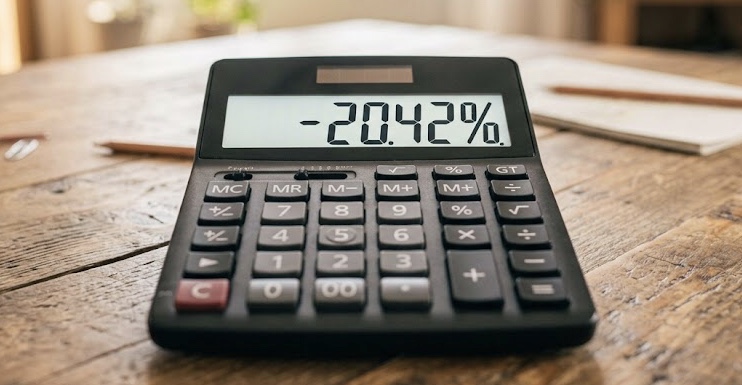
When you receive your Japanese Employees' Pension lump-sum withdrawal payment, the government automatically deducts 20.42% in income tax before the money reaches your bank account. On a ¥2,000,000 refund, that's ¥408,400 gone instantly.
But here's the good news: You may be able to recover some or all of the withheld tax, depending on your tax calculation.
Why Is 20.42% Deducted?
The Lump-sum Withdrawal Payment (脱退一時金, Dattai Ichiji Kin) is classified as "retirement income" under Japanese tax law. Since you receive it after leaving Japan, you're treated as a non-resident at the time of payment. Non-residents are subject to a flat 20.42% withholding tax on retirement income (20% national income tax + 0.42% Reconstruction Special Income Tax).
Important: This tax is only withheld from Employees' Pension (Kosei Nenkin) refunds. National Pension (Kokumin Nenkin) refunds are not subject to this withholding—you receive the full amount.
How to Claim the Tax Back
The refund is available through a procedure called "Elective Taxation on Retirement Income" (退職所得の選択課税, Taishoku Shotoku no Sentaku Kazei) under Articles 171–173 of Japan's Income Tax Act.
This allows you to file a tax return as a non-resident and have the retirement-income deduction applied under Japanese tax rules. Depending on the size of the deduction relative to your lump-sum payment, you may be able to recover some or all of the 20.42% withheld.
Step-by-Step Refund Process
Phase 1: Before Leaving Japan
| Step | Action | Where |
|---|---|---|
| 1 | Submit your moving-out notification (転出届, Tenshutsu-todoke) at your city/ward office. This deregisters your address and is required for the pension claim and related procedures. | City/Ward Office |
| 2 | Appoint a Tax Representative (納税管理人, Nozei Kanrinin) and submit the notification form to your local tax office. You can also do this after departure, but doing it beforehand simplifies the process. | Tax Office |
| 3 | Keep your pension handbook (年金手帳) or Basic Pension Number (基礎年金番号). You'll need this for the pension claim. | Take it with you |
Phase 2: After Returning Home — Claim the Lump Sum
| Step | Action | Timeline |
|---|---|---|
| 4 | Mail your claim form to the Japan Pension Service with your passport copy, bank details, and pension number. | As soon as possible after departure |
| 5 | Receive approximately 79.58% of your payout in your overseas bank account after 20.42% tax withholding. | About 4 months after the claim, assuming no issues or missing documents |
Phase 3: Claim the 20.42% Tax Back
| Step | Action | Timeline |
|---|---|---|
| 6 | Receive the "Notice of Entitlement" (脱退一時金支給決定通知書) by mail at your overseas address. This is an important original document. Do not throw it away. | Around the same time as Step 5 |
| 7 | Send the original notice to your Tax Representative in Japan via trackable international mail. | Immediately after receiving it |
| 8 | Your Tax Representative files a tax return (退職所得の選択課税) at the tax office, attaching the required documents. The tax return can generally be filed from January 1 of the year following the year in which the retirement income is taxable, or earlier if the relevant amount becomes fixed. | After receiving the notice and when the filing window opens |
| 9 | Tax refund is deposited into your Tax Representative's Japanese bank account. | Processing time varies |
| 10 | Your Tax Representative transfers the refund to your overseas account. | After receiving the refund |
Filing Deadline for the Tax Refund: The elective taxation procedure is subject to a statutory filing period. To avoid missing the deadline, file as soon as you are eligible and have received the necessary documentation.
How the Retirement Income Deduction Works
Japan's retirement income deduction is generally calculated as:
- ¥400,000 × years of qualifying service, for up to 20 years
- Minimum deduction of ¥800,000
The actual tax refund depends on the size of the deduction relative to your lump-sum payment.
Special Rule: For short-term retirement income, meaning 5 years or less of qualifying service, special tax rules may apply if the amount remaining after the retirement-income deduction exceeds ¥3 million. This is unlikely to affect many foreign workers receiving smaller lump-sum withdrawal payments, but it can matter for larger payments.
Example: 3 Years of Qualifying Service
| Item | Amount |
|---|---|
| Lump-sum Withdrawal Payment | ¥2,000,000 |
| Qualifying Contribution Period | 3 years |
| Retirement Deduction (¥400,000 × 3) | ¥1,200,000 |
| Taxable Income Before Half-Deduction | ¥800,000 |
| 1/2 Deduction (Retirement income is halved) | ¥400,000 |
| Income Tax (5% × 102.1%) | ¥20,420 |
| Tax Withheld (20.42% of ¥2,000,000) | ¥408,400 |
| Tax Refund | ¥387,980 |
In this example, the refund is ¥387,980—not the full ¥408,400. The amount you recover depends on your specific tax calculation.
Example: 5 Years of Qualifying Service
| Item | Amount |
|---|---|
| Lump-sum Withdrawal Payment | ¥2,000,000 |
| Qualifying Contribution Period | 5 years |
| Retirement Deduction (¥400,000 × 5) | ¥2,000,000 |
| Taxable Income | ¥0 |
| Tax Withheld | ¥408,400 |
| Tax Refund | ¥408,400 (full amount) |
In this example, the entire lump-sum payment is covered by the retirement-income deduction, resulting in no taxable retirement income under the assumptions shown.
Important: These examples are illustrative. The actual calculation can differ depending on your individual circumstances, including other retirement income or applicable special rules.
The Tax Representative: Why You Need One
The practical procedure requires a Japanese Tax Representative to handle the filing and refund process, particularly because the filing is made with the tax office having jurisdiction over your last Japanese address. The refund is paid to a Japanese bank account.
Who can be your Tax Representative?
- A friend or former colleague still living in Japan
- A family member in Japan
- A tax accountant or specialized service
- An individual or corporate entity residing in Japan who can act as your representative
No special professional qualification is generally required simply to act as a Tax Representative, although professional assistance can be helpful.
You can still appoint a Tax Representative after leaving Japan. If you leave without submitting the tax-agent notification, you can submit it together with the refund application later. However, doing so before departure simplifies the process significantly.
What to Watch Out For
| Pitfall | How to Avoid It |
|---|---|
| Losing the original Notice of Entitlement | Keep the original document safely and make a copy or scan for your records. |
| Not appointing a Tax Representative | Appoint one before you leave if possible. You can also appoint one after departure. |
| Not keeping your pension number | Take a photo or copy of your pension handbook before leaving. |
| Assuming the refund is automatic | You must file the appropriate tax return. There is no automatic refund of the withheld tax. |
| Missing the filing window | File as soon as you are eligible and have the necessary documents. |
| Special short-term retirement-income rules | If you have 5 years or less of qualifying service and the amount remaining after the retirement-income deduction exceeds ¥3 million, consult a tax professional. |
| Assuming every case produces a 100% refund | The refund depends on your individual tax calculation. Some people may recover only part of the withheld amount. |
Summary
| Feature | Detail |
|---|---|
| Tax Rate | 20.42% (20% income tax + 0.42% Reconstruction Special Income Tax) |
| Applies To | Employees' Pension (Kosei Nenkin) refunds |
| Does Not Apply To | National Pension (Kokumin Nenkin) refunds |
| How to Claim | File an "Elective Taxation on Retirement Income" tax return (退職所得の選択課税) |
| Tax Representative | A Tax Representative (納税管理人) in Japan is used to handle the procedure after departure |
| Result | You may be able to recover some or all of the withheld tax, depending on your tax calculation |
For official guidance, consult the National Tax Agency (国税庁), Japan Pension Service (日本年金機構), or a qualified tax professional. If you need personalized assistance, contact HSB JAPAN for a free consultation.