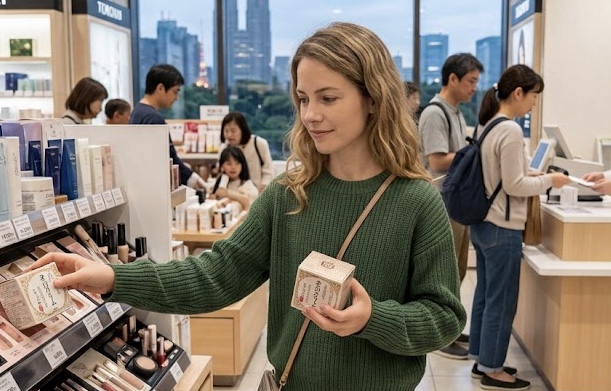
For years, tax-free shopping in Japan was simple for eligible international visitors: present the required identification at a participating tax-free shop, complete the tax-free procedure, and buy the goods without paying Japan's consumption tax.
That system changes for purchases made on or after November 1, 2026.
Japan is introducing a new Refund Method (Rifando Hoshiki). Under the new system, eligible shoppers generally pay the full tax-inclusive price at the store first. The amount equivalent to consumption tax is refunded only after Customs confirms at departure that the purchased goods are being taken out of Japan.
This guide explains what changes, how the new airport procedure works, and what you need to do to avoid losing your refund.
What Changes on November 1, 2026?
The biggest change is when you receive your tax benefit.
Until October 31, 2026
Eligible visitors generally receive tax-free treatment when purchasing goods at participating tax-free shops.
From November 1, 2026
The new process is:
- Buy eligible goods at a participating tax-free shop.
- Pay the tax-inclusive price.
- Register the refund method requested by the shop.
- Depart Japan within the required period.
- Complete the required Customs procedure confirming that the goods are being taken out of Japan.
- Receive a refund of the amount equivalent to consumption tax from the tax-free shop or its contracted refund provider.
The purpose of the new system is to prevent tax-free goods from being purchased and then illegally resold inside Japan instead of being exported.
The New Refund Method: How It Works
Step 1: Buy Your Goods at a Participating Tax-Free Shop
When purchasing eligible goods:
- Present the identification required for tax-free shopping.
- Complete the store's tax-free purchase procedure.
- Pay the full tax-inclusive price.
- Register your refund details if requested by the shop or its refund provider.
The exact refund method can vary because refunds are handled by the individual tax-free shop or a refund service provider contracted by that shop.
There is no single government-guaranteed refund timeframe. Ask the shop how and when your refund will be processed.
Step 2: Leave Japan Within 90 Days
The Customs confirmation must generally be completed when you depart Japan within 90 days from the date of purchase, according to the statutory calculation rules.
For example, the official NTA guidance explains that if goods are purchased on November 1, the deadline for Customs confirmation is January 30 of the following year.
If you do not complete the required Customs confirmation within the applicable period, you will not qualify for the refund.
Step 3: Complete the Customs Procedure Before Departure
At departure, Customs confirms that the tax-free goods are being taken out of Japan.
You must present your passport or other required identification during the procedure.
You must also be able to present your tax-free goods if Customs requests to inspect them.
This means you should not pack tax-free purchases somewhere inaccessible before completing the required procedure.
The exact location and workflow can vary by airport or seaport, so follow the instructions at your departure point.
The official traveler procedure shows Customs processing taking place before proceeding through the restricted departure area under the new Refund Method.
The Green and Red Customs Results
Under the new traveler procedure, Customs processing can result in different outcomes.
Green: Procedure Completed
If the system confirms the required information without requiring a physical inspection, your tax-free procedure is completed.
You can then continue with your departure process.
Red: Customs Inspection Required
If Customs requires an inspection, you must proceed to the designated Customs inspection area and present the requested goods.
Customs will determine whether the goods qualify for confirmation.
Only after the required Customs confirmation can the refund process proceed.
Important: Keep All Goods From the Same Purchase Record
This is one of the most important new rules.
The NTA specifically states that if you are not in possession of any tax-free goods included in the same purchase record information at the time of Customs confirmation, Customs confirmation cannot be received for all tax-free goods included in that purchase record.
In practical terms, if multiple tax-free items are recorded as part of the same purchase record, you should keep every item available and take all of them out of Japan.
Do not assume that you can consume, give away, lose, or leave behind one item and still automatically receive the refund for the rest of that purchase record.
Visit Japan Web at Major Airports
The new system includes digital processing options at certain airports.
According to the official traveler guidance, at designated areas of the international departure lobbies at the following airports, travelers can use Visit Japan Web (VJW) instead of the tax-free procedure terminal:
- Narita Airport
- Haneda Airport
- Kansai International Airport
- Chubu Centrair International Airport
- New Chitose Airport
- Fukuoka Airport
- Naha Airport
This option is available within designated areas where specially provided wireless LAN can be used for the procedure.
The availability and exact procedure should still be confirmed at your departure airport.
What Gets Easier Under the New System?
The 2026 reform removes several complicated rules from the old system.
1. The Consumables and General Goods Distinction Is Abolished
Previously, tax-free purchases were divided into categories such as:
- General goods, including clothing and electronics.
- Consumables, including food, cosmetics, and medicine.
These categories had different rules.
Under the Refund Method, this distinction is abolished for the revised tax-free system.
2. Special Sealed Packaging for Consumables Is Abolished
The old system imposed special packaging requirements on certain consumables.
Those requirements are removed under the revised system because Customs confirmation at departure becomes the central mechanism for confirming that the goods are being exported.
However, this does not mean you should freely consume your tax-free purchases in Japan.
You must be able to comply with the Customs confirmation requirements and, if requested, present the goods being taken out of Japan.
3. The ¥500,000 Consumables Cap Is Removed
The previous system imposed an upper limit on certain tax-free consumables.
The reform removes that distinction and the associated consumables cap.
Minimum Purchase Amount
The minimum tax-free purchase threshold remains ¥5,000 before tax per store per day under the revised framework.
The removal of the old category distinction simplifies how qualifying purchases are assessed.
Who Is Eligible for Tax-Free Shopping?
Japan's tax-free shopping system is intended for legally defined eligible tax-free goods purchasers.
This generally includes eligible foreign visitors who are treated as non-residents for purposes of the tax-free shopping system.
Certain Japanese nationals who have established qualifying overseas residence may also qualify, subject to the statutory requirements and required documentation.
Do not assume that simply being a foreign national automatically qualifies you for tax-free shopping.
Likewise, the rule should not be oversimplified as:
"Anyone who has been in Japan for less than six months is automatically eligible."
Eligibility depends on the legal requirements and the documentation presented at the tax-free shop. Check the official eligibility rules if your immigration or residence situation is unusual.
What Happens If You Mail the Goods Overseas?
Since April 1, 2025, purchasers generally cannot preserve tax-free treatment by personally sending purchased goods overseas through an international postal or shipping service.
The separate system under which a tax-free shop directly ships goods overseas remains available.
In other words:
| Method | Tax-free treatment |
|---|---|
| Purchaser arranges international shipping | Generally not eligible for the tax-free procedure. |
| Store directly ships the goods overseas | A separate direct-shipping system may still be available. |
Always ask the shop which system applies before making your purchase.
What About Airport Duty-Free Shops?
Airport duty-free stores operating under separate Customs and duty-free arrangements are different from ordinary domestic tax-free shops using the Refund Method.
The November 2026 Refund Method concerns Japan's tax-free shop system for eligible purchases made before departure.
Do not assume that every shop selling goods at an airport follows exactly the same procedure.
Follow the instructions provided by the individual retailer.
What You Should Do Before Going to the Airport
To avoid problems, follow these practical steps.
1. Keep Your Tax-Free Goods Together
Avoid separating items from the same purchase record.
Remember: if any goods from the same purchase record are not in your possession when Customs confirmation is required, the NTA states that confirmation cannot be received for all goods included in that purchase record.
2. Keep the Goods Accessible
Customs may request to inspect the goods.
Do not make them impossible to access before completing the required Customs procedure.
If you intend to put goods into checked luggage, check the airport's procedure in advance and allow enough time before your flight.
3. Arrive at the Airport Early
The new system adds a departure procedure that did not previously apply in the same way to every tax-free purchase.
Allow extra time, particularly if:
- You have many tax-free purchases.
- You have large or bulky items.
- Your goods may need to be inspected.
- You are unfamiliar with the airport.
- You are departing during a busy travel period.
4. Confirm Your Refund Method
Before leaving the store, make sure you understand:
- How your refund will be sent.
- Which payment details were registered.
- Whether the shop uses its own refund provider.
- Whether any additional action is required after Customs confirmation.
Refunds are handled by the individual tax-free shop or its contracted refund provider, not by a single government refund office.
Quick Comparison: Before and After November 1, 2026
| Item | Until October 31, 2026 | From November 1, 2026 |
|---|---|---|
| Price at the store | Generally tax-free | Tax-inclusive |
| Consumption tax | Not paid through the normal tax-free procedure | Paid first |
| Departure procedure | Different existing procedure | Customs confirmation required for the Refund Method |
| Goods export | Required under applicable rules | Customs confirms goods are being taken out of Japan |
| Refund | Usually reflected at purchase | Tax equivalent refunded after Customs confirmation |
| Consumables distinction | Separate rules | Abolished |
| Special consumables packaging | Required under previous rules | Abolished |
| Consumables spending cap | Applied under previous rules | Removed |
| Export deadline | Existing system rules | Customs confirmation generally required within 90 days of purchase |
Bottom Line
Japan's tax-free shopping system changes significantly on November 1, 2026.
The most important change is simple:
You pay first and receive the consumption-tax equivalent refund after Customs confirms that the tax-free goods are leaving Japan.
Your new action plan is:
- Buy from a participating tax-free shop.
- Present the required identification.
- Pay the tax-inclusive price.
- Register your refund method.
- Keep all goods from the same purchase record together.
- Leave Japan within the applicable 90-day period.
- Complete the Customs procedure at departure.
- Make the goods available if Customs requests an inspection.
- Receive the refund from the shop or its refund provider after the required Customs confirmation.
The new system is designed to make tax-free shopping more secure by ensuring that goods actually leave Japan before the tax benefit is finalized.
For the latest official rules and airport procedures, check the National Tax Agency and Japan Tourism Agency guidance before travelling, as operational procedures may vary by airport.
If you need personalized assistance with Japanese taxes or financial matters, contact HSB JAPAN for a professional consultation.