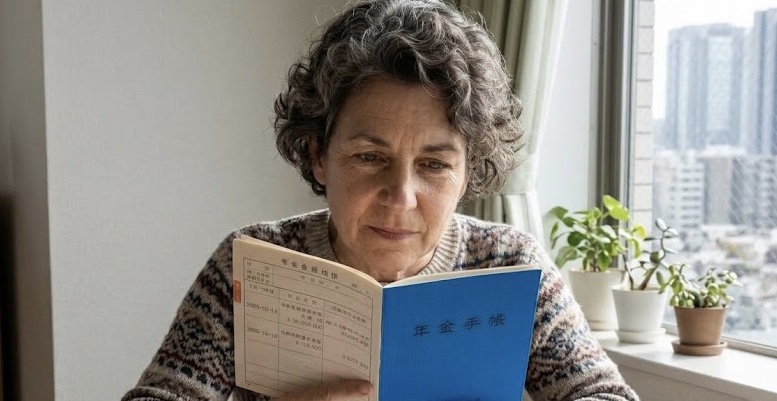
If you received a National Pension premium exemption during your time in Japan, you may have assumed those years were lost for pension purposes.
They are not necessarily lost.
Japan operates a back-payment system called tsuinou, which allows eligible people to pay premiums for previously exempted or deferred periods. Doing so can increase the amount of their future Japanese pension.
This system is particularly relevant for foreign residents who received exemptions during periods of low income, student status, or financial hardship and who may later qualify for a Japanese pension.
However, back-paying is not always the best financial decision. Before paying, you should understand the eligibility rules, deadlines, additional charges, and potential benefits.
What Is the Tsuinou (Back-Payment) System?
The National Pension back-payment system allows eligible people to pay premiums for certain periods when their National Pension contributions were exempted or deferred.
Eligible periods include:
- Full or partial premium exemptions (menjo).
- Payment deferment (nofu yuyo).
- Student payment special treatment (gakusei nofu tokurei).
By paying the eligible premiums retroactively, you can increase the amount of your future Old-Age Basic Pension (rorei kiso nenkin).
Who can use it?
People who received an eligible exemption or deferment may apply to pay those premiums retroactively, subject to the applicable conditions and time limits.
Who cannot use it?
People who are already entitled to receive the Old-Age Basic Pension cannot use the back-payment system.
Back-payment is not the same as paying ordinary overdue premiums for periods that were never covered by an approved exemption or deferment. Different rules apply to unpaid contributions.
How Much Does Your Pension Increase?
Back-paying can increase your annual pension, but the amount depends on the type of exemption or deferment you received.
The Japan Pension Service provides the following approximate figures for one year of back-paid contributions:
| Exemption or Deferment Type | Approximate Increase in Annual Basic Pension |
|---|---|
| Full premium exemption | ¥10,000 |
| Payment deferment | ¥20,000 |
| Student payment special treatment | ¥20,000 |
These figures are estimates rather than guaranteed individual outcomes.
The difference exists because full-exemption periods receive partial credit toward the pension amount even when the premiums are not subsequently paid.
By contrast, payment-deferment and student-special-treatment periods count toward the qualifying period for pension eligibility but do not increase the pension amount unless the premiums are subsequently paid.
The increase is reflected in your future annual Old-Age Basic Pension and can continue for as long as you receive that pension.
Important: The figures above describe the approximate increase in annual pension for one year of eligible back payments. They do not represent a refund or a one-time payment.
The 10-Year Rule: Your Window to Back-Pay
You can generally back-pay eligible National Pension premiums for periods within the preceding 10 years.
The relevant deadline is calculated by reference to the month in which the back-payment application is approved.
For example, if your application is approved in November 2026, you can generally back-pay eligible periods dating back to November 2016, subject to the applicable rules.
Once the 10-year window closes for a particular period, you can no longer back-pay that period under this system.
Do not wait until the last minute. The approval date matters, so submitting an application shortly before the deadline can put older periods at risk. Apply well before the oldest eligible period expires.
The Surcharge Rule: Pay Early to Avoid Extra Costs
Back payments may include a surcharge when they are made sufficiently long after the original exemption or deferment period.
The general rule is that a surcharge applies when payment takes place from the third fiscal year after the fiscal year of the relevant exemption or deferment period onward.
Japan's fiscal year runs from April 1 through March 31.
For example, if the relevant exemption period was in fiscal year 2024:
- FY2025: First fiscal year after the exemption year.
- FY2026: Second fiscal year after the exemption year.
- FY2027: Third fiscal year after the exemption year; the surcharge generally applies.
The surcharge depends on the applicable rules and the period being paid. It is not a single fixed percentage that applies to every back payment.
Paying earlier can therefore reduce the total cost.
Before making a payment, confirm the amount shown on the payment slip issued by the Japan Pension Service.
Important Restriction for Partial Exemptions
If you received a partial premium exemption, you must first have paid the portion of the premium that was not exempted.
Japan's partial-exemption categories are:
- Three-quarter exemption (3/4 menjo).
- Half exemption (1/2 menjo).
- One-quarter exemption (1/4 menjo).
For example, someone granted a three-quarter exemption was still required to pay one-quarter of the regular premium.
If that required portion was not paid, the period is treated as unpaid rather than as a valid partial-exemption period eligible for back-payment.
You cannot simply pay the exempted portion later while ignoring the originally required contribution.
Example of Back-Payment Amounts
For back payments made in FY2026 covering eligible FY2024 exemption periods, the monthly amounts are approximately:
| Exemption Type | Monthly Back-Payment Amount |
|---|---|
| Full exemption | ¥16,980 |
| Three-quarter exemption | ¥12,730 |
| Half exemption | ¥8,490 |
| One-quarter exemption | ¥4,240 |
These figures are for the specified FY2024 exemption periods and do not include a surcharge.
The amounts for other fiscal years can differ. Where a surcharge applies, the amount payable may be higher.
Always check the payment slips issued by the Japan Pension Service for the actual amount due.
Back-Payment Amounts by Fiscal Year
The following table gives examples of monthly back-payment amounts for full-exemption periods:
| Exemption Period | Monthly Back-Payment Amount in FY2026 |
|---|---|
| FY2024 (Reiwa 6) | ¥16,980 |
| FY2025 (Reiwa 7) | ¥17,510 |
| FY2026 (Reiwa 8) | Check the applicable official amount when it becomes available |
These are back-payment amounts, not necessarily the same as the regular monthly National Pension premium charged for current contributions.
The amount depends on the original exemption period, the applicable premium schedule, and whether a surcharge applies.
For partial exemptions, the amount is lower because the non-exempt portion was supposed to be paid separately.
How to Apply for Back Payment
The application process involves several steps.
Step 1: Check Your Eligibility and Payment Amounts
Review your National Pension record to identify periods eligible for back-payment.
You can use Nenkin Net, the Japan Pension Service's online pension information service, to review your record and estimate how back payments could affect your future pension.
Check the dates of your exemptions, deferments, or student-special-treatment periods carefully. Not every period without a contribution is eligible for back-payment.
Step 2: Submit the Application Form
Complete the National Pension Premium Back-Payment Application Form (Kokumin Nenkin Hokenryo Tsuino Moshikomisho).
The form is available through the Japan Pension Service. Nenkin Net may also help you prepare the application.
However, preparing the form through Nenkin Net does not mean that the application has been submitted electronically. The completed form must still be submitted to the appropriate Pension Office, either in person or by post.
City and ward offices generally do not process back-payment applications.
Step 3: Check the Payment Order
If you have several eligible periods, you generally must pay the oldest eligible periods first.
If your record includes different types of exemption and deferment, such as full exemptions and student-special-treatment periods, contact your Pension Office to confirm the applicable payment order.
This is particularly important if you cannot afford to pay all eligible periods at once.
Step 4: Receive Your Payment Slips
After the application is processed, the Japan Pension Service will issue payment slips for the approved back-payment amounts.
Check the amounts, covered periods, and payment deadlines before proceeding.
Step 5: Make the Payment
Depending on the payment slip and available services, payment can generally be made through:
- Banks and other financial institutions.
- Post offices.
- Convenience stores.
- Pay-easy electronic payment services.
- Supported smartphone payment apps.
Back payments cannot generally be made through ordinary bank direct debit or credit-card payment arrangements.
Follow the instructions provided with your payment slips to ensure that the payment is processed correctly.
The Tax Benefit: Social Insurance Premium Deduction
National Pension premiums paid through the back-payment system qualify for the Social Insurance Premium Deduction (shakai hokenryo koji), subject to the applicable tax rules.
This means the eligible amount you pay can be deducted from your taxable income for the relevant tax year.
The deduction may reduce your income tax and resident tax liability, depending on your circumstances.
For example, if you pay ¥200,000 in eligible back payments, that amount may be deductible from your taxable income. It does not mean that you receive ¥200,000 back from the government.
The actual tax benefit depends on factors such as your taxable income, applicable tax rates, and whether you have sufficient taxable income to benefit from the deduction.
If you file a final income tax return (kakutei shinkoku), keep the relevant payment records and supporting documents.
If you are eligible to claim the deduction through your employer's year-end adjustment, check the applicable procedure with your employer.
Back Payment vs. Voluntary Enrollment
Do not confuse back-payment (tsuinou) with voluntary enrollment (nini kanyu).
They are separate systems with different eligibility rules.
| System | Purpose |
|---|---|
| Back payment (tsuinou) | Paying eligible premiums for previously exempted or deferred periods |
| Voluntary enrollment (nini kanyu) | Obtaining additional National Pension coverage under specified conditions, including certain periods after age 60 |
Voluntary enrollment can help eligible people increase their pension entitlement by adding coverage periods. It is not a way to retroactively pay every type of missed contribution.
Back-payment, by contrast, concerns eligible historical exemption and deferment periods.
What This Means for Foreign Workers
For foreign residents, the decision to back-pay depends on their financial situation, pension record, and plans for the future.
If You Plan to Stay in Japan Long-Term
Back-paying eligible periods can increase your future Old-Age Basic Pension.
The benefit is particularly relevant if you have several years of student-special-treatment periods or payment deferments that currently do not increase the pension amount.
Compare the cost of the back payments with the estimated increase in your future pension before deciding.
If You Plan to Leave Japan and Claim a Lump-Sum Withdrawal Payment
Foreign residents who leave Japan may qualify for a Lump-sum Withdrawal Payment (dattai ichiji kin), subject to the eligibility requirements.
However, do not assume that back-paying exempted periods will increase your refund by the amount you pay.
The Lump-sum Withdrawal Payment is calculated under specific statutory rules, including applicable contribution-period limits. It is not simply a refund of every premium paid.
Furthermore, receiving a Lump-sum Withdrawal Payment means the relevant pension periods are no longer available to establish future Japanese pension entitlement.
Back-paying solely to increase a potential withdrawal payment may therefore be poor value. Compare the cost and potential pension benefits carefully before making a decision.
If You Have Exemptions from Your Student Years or Low-Income Periods
These periods may be good candidates for back-payment, particularly if they involve student-special-treatment or payment-deferment periods that do not increase your pension amount unless you pay the premiums later.
However, you should still consider the cost, surcharge, time remaining before the 10-year deadline, and whether you expect to receive a Japanese pension in the future.
Practical Checklist
Before making a back payment:
- Check your Nenkin Net record and identify eligible exemption and deferment periods.
- Confirm the 10-year deadline for each period, using the applicable approval-month rule.
- Calculate the total cost, including any surcharge.
- Estimate how much the back payments would increase your future pension.
- Check whether any required non-exempt portions of partial-exemption premiums remain unpaid.
- Ask your Pension Office about the payment order if you have several eligible periods.
- Submit the application to the Pension Office and wait for the payment slips.
- Keep your payment records for tax purposes.
- If you plan to leave Japan, compare the potential pension benefits with the rules governing the Lump-sum Withdrawal Payment before paying.
The Bottom Line
Japan's National Pension back-payment system allows eligible people to pay premiums for certain previously exempted or deferred periods, increasing their future Old-Age Basic Pension.
However, back-payment is not automatically the best financial choice for everyone. The decision depends on the type of exemption, the amount due, any surcharge, your future pension eligibility, and your plans for remaining in Japan.
Key points to remember:
- 10-year limit: Eligible periods generally must fall within the applicable 10-year window, calculated by reference to the approval month.
- Surcharges: Additional charges generally apply from the third fiscal year after the relevant exemption or deferment year.
- Partial exemptions: The required non-exempt portion must have been paid.
- Payment order: Older eligible periods generally must be paid first.
- Pension increase: Back payments can increase the future Old-Age Basic Pension, with the effect depending on the original exemption or deferment.
- Tax deduction: Eligible back-paid premiums qualify for the Social Insurance Premium Deduction, subject to the applicable tax rules.
- Lump-sum Withdrawal Payment: Do not assume that back payments will increase a future withdrawal payment by the same amount.
For foreign workers with exempted periods, the best approach is to check the official pension record, calculate the cost, and compare the potential long-term benefit with your personal circumstances.
For personalized assistance with Japanese pension procedures or related tax matters, contact HSB JAPAN for a professional consultation.