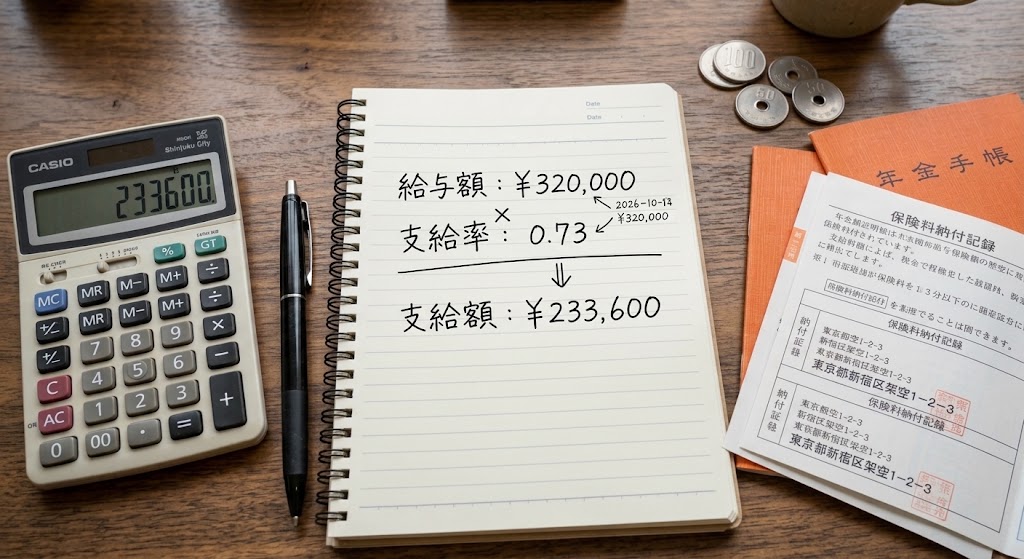
If you paid into Japan's pension system, you may be eligible for a lump-sum withdrawal payment (dattai ichiji kin) when you leave Japan. However, the amount you receive and whether tax is withheld depend on which pension system you were enrolled in.
Many foreign workers assume that all Japanese pension contributions are treated identically when they leave Japan. That assumption is incorrect. National Pension and Employees' Pension Insurance have different calculation methods and different tax withholding rules.
If you switched between the two systems during your stay—for example, from National Pension contributions as a student to Employees' Pension Insurance through full-time employment—you may have contributions under both systems. Understanding how these periods are treated is essential before estimating your refund.
This article explains the differences, how the payments are calculated, why only the Employees' Pension payment is subject to 20.42% withholding, and what happens when your contribution history includes both systems.
The Two Pension Systems, Briefly
Japan's public pension system has two main components.
National Pension (Kokumin Nenkin) generally covers residents aged 20 to under 60 who are not enrolled in Employees' Pension Insurance. This includes self-employed people, freelancers, students and other eligible residents. Contributions are a flat monthly amount set by the government.
Employees' Pension Insurance (Kosei Nenkin) covers employees working for employers subject to the applicable enrollment requirements. Contributions are calculated using standard remuneration and bonus amounts, with the cost generally shared between the employee and employer.
Most foreign workers in standard employment, including many engineers, office workers and Specified Skilled Workers, are enrolled in Employees' Pension Insurance. Technical Intern Trainees are also generally covered when employed under the applicable requirements.
The distinction matters when claiming a lump-sum withdrawal payment because the two systems use different calculation methods and have different tax withholding rules.
National Pension Refund: A Fixed Table, No Tax Withheld
The National Pension lump-sum withdrawal payment is calculated using a fixed table based on the qualifying contribution-paid period. It does not depend on your salary.
For final qualifying contribution months between April 2026 and March 2027, the amounts are:
| Qualifying contribution period | Refund amount |
|---|---|
| 6–11 months | ¥53,760 |
| 12–17 months | ¥107,520 |
| 18–23 months | ¥161,280 |
| 24–29 months | ¥215,040 |
| 30–35 months | ¥268,800 |
| 36–41 months | ¥322,560 |
| 42–47 months | ¥376,320 |
| 48–53 months | ¥430,080 |
| 54–59 months | ¥483,840 |
| 60 months or more | ¥537,600 |
These figures are based on the Japan Pension Service's published calculation schedule for the 2026 fiscal year.
The important point is that no income tax is withheld at source from the National Pension lump-sum withdrawal payment. You therefore do not need to submit a tax refund claim to recover the 20.42% withholding associated with Employees' Pension payments.
However, the qualifying period is not necessarily identical to the number of months you were registered for National Pension. Certain contribution-exemption periods count only partially.
For example, depending on the exemption category, a month may count as three-quarters, one-half or one-quarter of a qualifying month. Months for which contributions were not paid and which do not qualify under the applicable rules cannot simply be counted as full contribution months.
If your entire qualifying history was under National Pension, your payment is calculated using the applicable table, subject to the eligibility requirements and calculation limits.
Employees' Pension Refund: Salary-Based and Subject to Tax Withholding
The Employees' Pension lump-sum withdrawal payment is calculated differently. It is based on your average standard remuneration, including applicable standard bonus remuneration, multiplied by a coefficient determined by the qualifying contribution period.
The standard remuneration figures recorded for pension purposes are used. These are not necessarily identical to your actual gross salary or a simple average of all payments received.
For the 2026 fiscal year, the multipliers are:
| Qualifying contribution period | Multiplier |
|---|---|
| 6–11 months | × 0.5 |
| 12–17 months | × 1.1 |
| 18–23 months | × 1.6 |
| 24–29 months | × 2.2 |
| 30–35 months | × 2.7 |
| 36–41 months | × 3.3 |
| 42–47 months | × 3.8 |
| 48–53 months | × 4.4 |
| 54–59 months | × 4.9 |
| 60 months or more | × 5.5 |
The general calculation is:
Average standard remuneration × applicable multiplier = gross lump-sum withdrawal payment.
For example, assume your applicable average standard remuneration is ¥250,000 and your qualifying contribution period is 36–41 months.
Your calculation would be:
¥250,000 × 3.3 = ¥825,000
Your gross Employees' Pension lump-sum withdrawal payment would therefore be ¥825,000.
However, unlike National Pension, the Employees' Pension payment is subject to income tax withholding.
For a non-resident receiving this payment, 20.42% is generally withheld at source.
In this example:
- Gross payment: ¥825,000
- Tax withheld at 20.42%: ¥168,465
- Initial payment received: ¥656,535
The withheld amount may be recoverable through the applicable Japanese tax refund procedure.
If you have already left Japan, you generally need to appoint a Japanese tax agent to handle the tax return and receive the refund on your behalf. If you did not submit the tax-agent notification before departure, it can be submitted together with the relevant tax return.
The 20.42% withholding is an initial withholding amount, not necessarily your final tax liability.
Why Is Only the Employees' Pension Payment Taxed?
The different treatment comes from the way the two lump-sum payments are classified for Japanese tax purposes.
The National Pension lump-sum withdrawal payment is not subject to the 20.42% withholding applied to the Employees' Pension payment.
The Employees' Pension lump-sum withdrawal payment is treated as retirement income (taishoku shotoku) for Japanese tax purposes. Consequently, a non-resident receiving this payment is generally subject to 20.42% withholding at source.
This is why the tax withholding applies to the Employees' Pension portion rather than the National Pension portion.
It is important to distinguish between tax withholding and the final tax calculation. The withholding is deducted before payment, but the claimant may subsequently recover it through the appropriate tax procedure.
What Happens If You Contributed to Both Systems?
This is where the rules become particularly important.
Some foreign residents have pension records under both systems during their time in Japan.
For example:
- You initially paid National Pension contributions while studying.
- You later started full-time employment and joined Employees' Pension Insurance.
- You subsequently left Japan and became eligible to apply for a lump-sum withdrawal payment.
The two systems use different calculation methods, but your contribution history must be assessed as a whole.
The six-month eligibility requirement is based on the qualifying period under the relevant pension scheme. You generally need at least six qualifying months under National Pension or at least six months of Employees' Pension Insurance enrollment.
You cannot automatically combine three months of National Pension with five months of Employees' Pension Insurance to satisfy the six-month minimum.
For National Pension, the qualifying period may include weighted portions of certain contribution-exemption periods. It is therefore important to check the actual qualifying period rather than simply counting the months shown in your registration history.
When a person has periods under both systems, the Japan Pension Service must assess the complete pension history and the applicable calculation rules. Do not assume that the two payments can always be calculated independently and added together without considering the overall contribution history.
The calculation methods remain different:
- National Pension uses the applicable fixed calculation table.
- Employees' Pension uses the applicable standard remuneration figures and multiplier.
The tax treatment also remains different:
- National Pension: no 20.42% withholding at source.
- Employees' Pension: generally subject to 20.42% withholding for non-residents.
If your history includes both systems, you should confirm how the Japan Pension Service will calculate your entitlement before estimating the combined payment.
Understanding the 60-Month Calculation Limit
The lump-sum withdrawal calculation is subject to a maximum of 60 months.
This limit is particularly important for people who have spent several years working in Japan or who have switched between National Pension and Employees' Pension Insurance.
The 60-month limit must not be interpreted as two separate allowances of 60 months each, one for National Pension and another for Employees' Pension.
In other words, having contributions under both systems does not automatically give you the right to receive two independently calculated payments covering up to 60 months each.
The Japan Pension Service assesses the relevant pension coverage history when determining the applicable lump-sum withdrawal payment. The calculation limit and the treatment of periods under both systems must therefore be considered together.
For example, someone with 72 months of qualifying Japanese pension coverage cannot simply assume that all 72 months will increase the lump-sum withdrawal payment. The calculation is subject to the 60-month maximum.
This also means that someone with a mixed National Pension and Employees' Pension history should not calculate their expected refund by independently applying the maximum to each system and adding the results.
Important: Receiving a lump-sum withdrawal payment invalidates the relevant previous Japanese pension coverage periods. Those periods can no longer be used to establish future Japanese pension entitlement or to combine with qualifying periods under applicable international social security agreements.
The 10-Year Pension Eligibility Rule: Check Before Claiming
Before applying for a lump-sum withdrawal payment, check whether you already have enough qualifying periods to receive a Japanese old-age pension.
Generally, a person who has accumulated at least 10 years (120 months) of qualifying pension periods may be entitled to an old-age pension under the Japanese system.
The qualifying period is not limited to months when you personally paid National Pension contributions. Depending on your circumstances, it can include:
- National Pension contribution-paid periods.
- National Pension contribution-exemption periods.
- Employees' Pension Insurance enrollment periods.
- Certain other qualifying periods, including applicable periods under international social security agreements.
This is important for foreign workers who have lived or worked in more than one country.
If you already qualify for a Japanese old-age pension, you generally cannot claim the lump-sum withdrawal payment.
Even if you have fewer than 10 years of actual employment in Japan, other qualifying periods may affect your eligibility.
Do not apply for a lump-sum withdrawal payment without checking your complete pension record. Once the payment is made, the relevant Japanese pension periods are invalidated.
What You Should Check Before Claiming
Before submitting your application, review the following points.
1. Confirm which pension systems you were enrolled in.
Your pension record should show whether you contributed to National Pension, Employees' Pension Insurance or both. The Japan Pension Service can help confirm your coverage history.
2. Check your qualifying contribution periods.
Do not assume that every month of National Pension registration counts as a full qualifying month. Certain exemption periods are weighted differently.
3. Check the 60-month calculation limit.
Do not calculate National Pension and Employees' Pension refunds as two independent 60-month allowances. Your complete Japanese pension history must be considered.
4. Calculate your Employees' Pension payment before tax.
Use the applicable standard remuneration figures and multiplier. The 20.42% withholding is deducted from the gross Employees' Pension payment.
5. Remember that National Pension has no 20.42% withholding.
You do not need to arrange a tax refund for withholding that was never deducted from the National Pension payment.
6. Check whether you already qualify for a Japanese pension.
If your combined qualifying periods reach 120 months, you may be entitled to a future pension instead of a lump-sum withdrawal payment.
7. Consider the consequences of claiming.
A lump-sum withdrawal payment invalidates the relevant previous Japanese pension periods. This may affect your future pension entitlement and the ability to use those periods under international social security agreements.
The Bottom Line
Japan's National Pension and Employees' Pension systems use different methods to calculate lump-sum withdrawal payments.
The National Pension payment is calculated using a fixed table based on qualifying contribution periods and is not subject to the 20.42% withholding applied to Employees' Pension payments.
The Employees' Pension payment is calculated using standard remuneration figures and a contribution-period multiplier. For non-residents, 20.42% is generally withheld at source, but the withheld amount may be recoverable through the Japanese tax refund procedure.
If your pension history includes both systems, the calculation is more complicated. The qualifying periods, the 60-month calculation limit and the consequences of receiving a lump-sum payment must all be considered using your complete pension record.
Most importantly, do not assume that you can claim two separate refunds, each calculated using its own independent 60-month allowance. Confirm your entitlement with the Japan Pension Service before applying.
For personalized assistance with Japanese pension refunds, tax matters or determining which pension systems you contributed to, contact HSB JAPAN for a professional consultation.