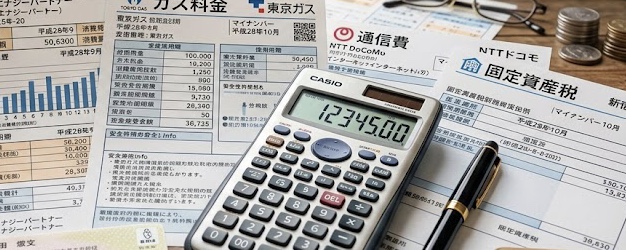
Living in Japan in 2026 can cost considerably more than it did several years ago. Housing costs have risen in major cities, food and other everyday expenses remain elevated, and many households are also dealing with higher insurance and tax costs.
Japan's inflation rate has moderated from its recent highs, but prices remain significantly higher than they were during the deflationary period of the past. The Bank of Japan's July 2026 outlook projects consumer inflation excluding fresh food at approximately 2.5% for fiscal 2026.
At the same time, wages have continued to rise. The 2026 spring wage negotiations produced strong increases, although the figures differ depending on the size of the employer and the stage of negotiations.
In other words, if you are budgeting based on what you or a friend paid in Japan in 2022, your numbers may no longer be realistic.
This guide explains the main costs you should consider when budgeting for life in Japan in 2026.
The Big Picture: Japan Is More Expensive Than It Was a Few Years Ago
Japan is not experiencing the same prolonged deflation that characterized much of the previous decade.
Food, household goods, services and housing have all experienced price increases, while rents in major urban areas have also been rising.
Wages have increased as well. The 2026 spring wage negotiations produced wage increases of around 5% in early RENGO tallies, although the final figures vary by company size and the stage of negotiations.
This does not mean every foreign worker received a 5% raise. Many workers, particularly those employed by smaller companies, may have received smaller increases—or none at all.
The important point for personal budgeting is simple: your own salary increase matters more than the national average.
Housing: Usually Your Largest Monthly Expense
Rent is normally the largest fixed expense for a single person living in Japan.
The amount varies enormously depending on the city, neighborhood, apartment size, building age and distance from the nearest station.
Tokyo Rental Market in 2026
Tokyo rents have continued to rise.
Recent rental-market data for Tokyo's 23 wards showed rents reaching record levels in early 2026, with single-person properties and family-sized properties both recording substantial year-on-year increases.
However, there is no single "Tokyo rent." A small apartment in an outer ward can cost dramatically less than a newer apartment close to a major station in central Tokyo.
Approximate Monthly Rent for a Single Person
As a general budgeting guide, a 1K or 1DK apartment may fall roughly within these ranges:
| Area | Approximate Monthly Rent |
|---|---|
| Tokyo 23 wards | ¥90,000–¥110,000+ |
| Yokohama/Kawasaki | ¥70,000–¥85,000 |
| Osaka | ¥60,000–¥75,000 |
| Fukuoka | ¥50,000–¥65,000 |
| Sapporo | ¥45,000–¥60,000 |
| Smaller cities/rural areas | ¥30,000–¥45,000+ |
These are planning ranges, not official national averages. You can find properties both below and above these figures.
Always check current listings in the specific neighborhood where you intend to live.
The Hidden Cost of Moving Into an Apartment
Rent is only part of the initial cost.
Depending on the property and landlord, moving into a Japanese apartment can require several months' worth of rent in advance.
Typical costs can include:
- Shikikin (security deposit): commonly around 0–2 months' rent
- Reikin (key money): commonly around 0–2 months' rent, although many properties now advertise without it
- Agency fee: often up to approximately one month's rent plus consumption tax
- Guarantor company fee: commonly a percentage of the rent, depending on the contract
- Fire insurance: commonly required for rental properties
- Lock replacement: may be charged depending on the property
- Other initial fees: cleaning, administrative and contract-related charges may apply
As a result, initial move-in costs can easily reach several months of rent.
For a major-city apartment, having ¥300,000–¥500,000 or more available for the initial move is a reasonable amount to budget for, although low-cost properties can require substantially less and expensive properties can require considerably more.
Utilities: Electricity, Gas and Water
Utility costs vary according to apartment size, household size, region, energy provider and season.
A single person living alone should generally expect utility costs to be higher during periods of heavy air-conditioning or heating use.
Electricity
Electricity costs depend heavily on your provider, tariff and consumption.
A single person might budget approximately ¥5,000–¥10,000 per month, but summer and winter bills can be substantially higher for households that use air-conditioning or electric heating heavily.
Some apartments are all-electric (All Denka) and do not use gas. This can simplify the utility bill but does not necessarily make the apartment cheaper to operate.
Electricity prices also change over time because of fuel costs, government support programs and changes to regulated charges. For that reason, avoid assuming that a particular 2026 price increase applies to every household in Japan.
Gas
For an apartment using city gas, a single person might spend approximately ¥3,000–¥5,000 per month under moderate usage.
Gas consumption can rise considerably in winter because hot-water usage increases.
Apartments using propane gas can have different pricing and may be considerably more expensive than city-gas properties.
Water
Water and sewerage charges are commonly billed every two months, although billing arrangements vary by municipality.
For a single person, budgeting approximately ¥2,000–¥4,000 per month as an averaged monthly cost is reasonable for planning purposes.
Approximate Utility Budget
For a single person:
Electricity + gas + water: roughly ¥10,000–¥20,000 per month
This is only a budgeting range. Heavy air-conditioning, electric heating, frequent baths and other high-consumption habits can push the amount considerably higher.
Internet and Phone
Internet and mobile service are recurring expenses that can be reduced substantially by choosing the right plans.
Home Internet
Fiber-optic internet (hikari) is widely available in Japan.
A typical standalone fiber plan may cost approximately ¥4,000–¥6,000 per month, depending on the provider and service.
Installation fees vary. Promotions sometimes waive or reduce installation charges, while other contracts may require an upfront fee.
Mobile Phone
The major Japanese carriers include:
- NTT Docomo
- au
- SoftBank
Standard plans from major carriers can be relatively expensive, particularly when they include large data allowances and additional services.
However, Japan also has lower-cost online brands and sub-brands, including:
- ahamo
- LINEMO
- UQ mobile
- Rakuten Mobile
Depending on your data usage and plan, ¥2,000–¥4,000 per month can be a realistic target for mobile service.
The cheapest plan is not automatically the best plan. Coverage, data allowance, international roaming, customer service and other conditions differ between providers.
For many users, however, switching from an expensive major-carrier plan to a lower-cost plan can save tens of thousands of yen per year.
Approximate Internet + Phone Budget
For a single person:
¥6,000–¥10,000 per month
is a reasonable target if you choose relatively inexpensive plans.
The Complete Monthly Budget: Single Person in a Major City
The following is an example of a reasonable 2026 planning budget for one person living in a major Japanese city.
| Category | Approximate Monthly Budget |
|---|---|
| Rent | ¥80,000–¥100,000 |
| Electricity, gas and water | ¥10,000–¥20,000 |
| Internet | ¥4,000–¥6,000 |
| Mobile phone | ¥2,000–¥4,000 |
| Food | ¥40,000–¥60,000 |
| Transportation | ¥8,000–¥12,000 |
| Health insurance | Varies by income and municipality |
| Resident tax | Varies by previous-year income and municipality |
| Basic living total before insurance/tax variation | Approximately ¥144,000–¥202,000 |
The final amount can be considerably higher depending on your rent, lifestyle, insurance premiums and taxes.
Health Insurance and Resident Tax Need Special Attention
Unlike rent or a mobile phone plan, Japanese health insurance and resident tax cannot be accurately represented by one universal monthly figure.
If you are enrolled in National Health Insurance (NHI), your premium is calculated according to rules set by your municipality and generally depends on factors including your previous year's income and household circumstances.
If you are an employee enrolled in Employees' Health Insurance and Employees' Pension Insurance, your premiums are generally deducted from your salary instead.
Resident tax is also based primarily on your previous year's income and is affected by deductions and your municipality.
Therefore, do not assume that every single worker will pay only a few thousand yen per month for these items.
The Delayed Resident-Tax Effect
One of the biggest budgeting surprises for newcomers is that resident tax is based on the previous year's income.
The important date is January 1.
If you were not a resident of a Japanese municipality on January 1 of a particular year, you generally will not owe resident tax to that municipality based on income from the preceding year.
For someone who arrives in Japan during the year, this can create a delayed effect.
For example, someone who arrives during 2025 may not have a Japanese resident-tax bill for 2025 because they were not resident in Japan on January 1, 2025. If they are resident on January 1, 2026, however, their 2025 income can be used to calculate their 2026 resident tax.
Resident tax is generally collected beginning around June of the assessment year.
This is why some newcomers experience a significant reduction in take-home pay after their first year of employment.
Budget for It From the Beginning
Do not treat your first-year take-home pay as your permanent take-home pay.
If you begin earning a normal salary in Japan, calculate what your resident-tax liability could be once the following year's assessment begins.
The exact amount depends on your income, deductions, household circumstances and municipality.
Food: One of the Most Flexible Expenses
Food costs vary enormously depending on your lifestyle.
A single person who cooks frequently may be able to keep food spending around ¥30,000–¥40,000 per month, while someone who frequently eats at restaurants, orders delivery or buys convenience-store meals can easily spend considerably more.
For a broader 2026 planning budget:
¥40,000–¥60,000 per month is reasonable for a single person who cooks at home but also eats out occasionally.
Eating out every day can push the monthly amount much higher.
The good news is that food is one of the easiest categories to control.
Transportation
Transportation costs depend heavily on where you live and where you work.
A person with a short commute may spend relatively little outside their employer-covered commuting route, while someone who regularly travels around Tokyo or another major city can spend much more.
For personal budgeting, ¥8,000–¥12,000 per month is a reasonable example for a single person, but actual spending varies considerably.
If your employer pays your commuting expenses, your personal transportation cost may be much lower.
How to Reduce Your Cost of Living
1. Choose Your Location Carefully
Rent can change dramatically even between neighboring areas.
Living farther from central Tokyo or Osaka can reduce rent substantially.
However, calculate the full cost rather than looking only at rent.
A cheaper apartment may mean:
- A longer commute
- Higher transportation costs
- More time spent traveling
- Higher moving costs if you later relocate
A ¥20,000 monthly rent saving may not be worth it if you spend much of that amount on additional transportation.
2. Optimize Your Mobile Plan
Check how much mobile data you actually use.
If you are paying ¥8,000 or more per month but use only a modest amount of data, a lower-cost plan could save you tens of thousands of yen per year.
Compare the actual conditions before switching rather than choosing a plan solely because it is cheaper.
3. Cook at Home
Food is one of the easiest expenses to control.
Cooking most meals at home can significantly reduce your food bill compared with eating out or ordering delivery every day.
You do not need to eliminate restaurants completely. Even reducing restaurant meals to a few times per week can make a noticeable difference.
4. Buy Furniture and Appliances Second-Hand
Japan has a large second-hand market for furniture and appliances.
Recycle shops, online marketplaces and local community groups can offer substantial savings compared with buying everything new.
Be particularly careful with appliances: check their age, condition, warranty and whether they meet current safety requirements before purchasing.
5. Review Your Insurance and Health-Care Costs
If you are enrolled in National Health Insurance and your income changes significantly, check whether your municipality offers a reduction or special treatment applicable to your circumstances.
Do not assume that a reduction is automatic.
If you are an employee enrolled in an employer-sponsored health insurance plan, different rules apply.
A Realistic 2026 Budget
For a single person renting a modest apartment in a major Japanese city, a reasonable starting point is:
Approximately ¥150,000–¥220,000+ per month for basic living costs, before discretionary spending and depending heavily on rent, taxes and insurance.
Someone living in a cheaper city or apartment can spend considerably less.
Someone living in central Tokyo, eating out frequently, traveling regularly or paying higher insurance and tax amounts can easily spend considerably more.
The number that matters most is not the national average—it is your own combination of rent, salary, taxes, insurance and lifestyle.
The Bottom Line
Japan in 2026 is more expensive than it was several years ago, but there is no single cost-of-living figure that applies to every foreign worker.
Your biggest expenses will normally be:
- Rent
- Food
- Utilities
- Health insurance
- Resident tax
- Transportation
For someone living alone in a major city, ¥150,000–¥220,000+ per month is a reasonable starting point for a basic budget, but the actual figure can vary substantially.
The most important things to remember are:
- Tokyo rents have continued to rise.
- Inflation remains positive even though it has moderated from its recent highs.
- Wage growth does not necessarily match the increase received by every individual worker.
- National Health Insurance premiums depend on income and municipality.
- Resident tax is based on previous-year income and can create a delayed financial burden for newcomers.
- Mobile plans can often be reduced significantly by comparing lower-cost options.
- Initial apartment costs can require several months of rent.
- Your lifestyle can easily add ¥20,000–¥50,000 or more to your monthly spending.
The safest approach is to calculate your own budget using the actual rent, salary, municipality, insurance status and commuting arrangements that apply to you rather than relying on a generic national average.
For personalized assistance with Japanese tax procedures, resident tax or other financial matters, contact HSB JAPAN for a professional consultation.