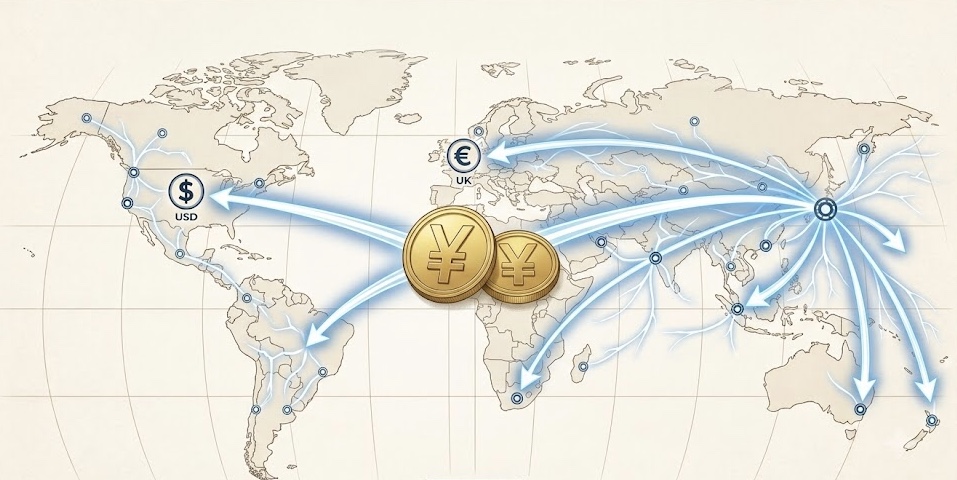
If you're a foreign worker in Japan, sending money back home is probably something you do regularly—whether you're supporting family, paying off loans, or saving in your home currency. But the fees and exchange rates can vary significantly depending on which service you use.
This guide explains the main options for sending money overseas from Japan and how to avoid unnecessary costs.
Why the "Cheapest" Service Isn't Always What It Seems
The cost of sending money abroad from Japan goes beyond the stated transfer fee. Some services advertise low or zero transfer fees while making money through their exchange rate.
There are two main costs to watch:
| Cost Type | What It Is |
|---|---|
| Transfer Fee | The flat or percentage fee charged for the transfer |
| Exchange Rate Markup | The difference between the provider's exchange rate and the underlying market rate |
A service with a ¥0 transfer fee isn't necessarily cheaper if it gives you a significantly worse exchange rate.
The best approach is to compare the total amount your recipient will receive, not just the advertised transfer fee.
Complete Comparison: Major Money Transfer Options from Japan
Wise: Strong Choice for Most Expats
Wise Japan is one of the strongest options for people making regular international transfers from Japan.
Why Wise stands out
| Feature | Detail |
|---|---|
| Exchange rate | Uses the mid-market exchange rate |
| Fees | Transparent and vary by currency and transfer method; Wise currently advertises fees from around 0.73% |
| Speed | Varies by destination, currency, funding method, and receiving bank |
| Regulation | Wise Payments Japan is registered as a funds-transfer service provider in Japan |
| Verification | Identity and My Number documentation may be required |
Wise's published pricing currently starts at around 0.73%, although the actual cost depends on the currency pair and transfer amount.
For JPY transfers from Japan, Wise allows funding by bank transfer or debit card from your own Japanese bank account. Credit cards cannot be used to fund a JPY transfer.
Wise also requires the name on the funding bank account to match the name on your Wise account.
Important: Don't assume that Wise will always be the cheapest option for every currency corridor. Compare the final amount received before confirming the transfer.
Revolut: Useful for Frequent Transfers, With Important Limits
Revolut Japan can be useful for people who regularly exchange currencies or send money internationally.
However, there is an important distinction in Japan:
Revolut Technologies Japan is not a Japanese bank. It is a Class 2 Funds Transfer Service Provider registered with the Kanto Local Finance Bureau.
Standard plan
| Feature | Current Standard-plan rule |
|---|---|
| Weekday currency exchange | No additional exchange fee up to ¥300,000 per monthly cycle |
| Above ¥300,000 | 0.5% exchange fee on the excess |
| Weekend exchange | 1% additional exchange fee for Standard users |
| International transfer fee | No Revolut international transfer fee, although intermediary banks may charge |
| ATM withdrawals | Up to ¥25,000/month without a Revolut withdrawal fee; ATM-owner fees may still apply |
| Transaction limit | ¥1 million equivalent per transaction |
These limits and fees are based on Revolut Japan's current published terms and can change.
Important ¥1 million limit:
Because Revolut Japan operates as a Class 2 Funds Transfer Service Provider, transfers/payments from the account are capped at ¥1 million equivalent per transaction.
This makes Revolut less convenient for a single large transfer that exceeds ¥1 million.
For regular transfers within the applicable limits, however, it can be useful—particularly if you already use Revolut to hold and exchange multiple currencies.
Western Union: Best for Cash Pickup and Convenience
Western Union Japan is particularly useful when the recipient needs cash or doesn't have convenient access to a bank account.
When Western Union makes sense
- The recipient needs cash pickup
- The recipient doesn't have a bank account
- You're sending to a destination where cash pickup is convenient
- You need a transfer option with physical agent locations
Western Union currently lists more than 200 agent locations in Japan.
Transfers can be sent online, through the app, or at an agent location. Depending on the destination and service, recipients can receive money by bank account, mobile wallet, or cash pickup.
Speed:
Some transfers can become available within minutes, but this is not guaranteed. Transfer speed can depend on:
- Amount
- Destination
- Payment method
- Identity verification
- Regulatory checks
- Agent opening hours
- Recipient payout method
For that reason, don't advertise Western Union as guaranteeing instant transfers.
Sony Bank: Useful for Internet-Based International Transfers
Sony Bank can be a good option if you already use Sony Bank in Japan and want international transfers integrated into your Japanese banking setup.
Current features
| Feature | Detail |
|---|---|
| International transfer fee | ¥3,000 per transfer |
| Club S benefits | Certain Club S tiers can receive free-transfer allowances |
| Correspondent-bank fee | Additional ¥3,000 may apply when the sender chooses to bear this fee |
| Supported currencies | 11 currencies for Sony Bank's international-transfer/debit-card ecosystem |
| Application | Online; generally available 24/7 except maintenance |
Sony Bank currently charges ¥3,000 for an outgoing foreign-currency transfer. Club S Gold provides up to one free outgoing transfer per month, while Platinum provides up to three.
A separate ¥3,000 correspondent-bank fee can apply if you choose to bear that cost. This fee is not covered by the Club S free-transfer benefit.
Sony Bank therefore isn't necessarily the cheapest option for every transfer, but it can be attractive for people who already use the bank and regularly send larger amounts.
Japan Post Bank: A Traditional Option With Online Convenience
Japan Post Bank International Remittance offers international transfers to supported countries and regions.
The current application fee is ¥3,000 per transfer. Intermediary banks or receiving banks may separately deduct fees from the transferred amount.
Current limits include:
- Less than ¥1 million per transfer
- Up to ¥2 million per day
- Up to ¥5 million per month
These limits are based on the exchange rate used when the transfer is made.
Japan Post Bank can be convenient if you already have a Japan Post Bank account and prefer using a familiar Japanese bank rather than a dedicated remittance service.
Traditional Japanese Banks: When to Use Them
Traditional bank transfers can be more expensive than specialist remittance services, particularly when you include the exchange-rate spread and intermediary-bank charges.
Examples include:
- MUFG
- SMBC
- Mizuho
The exact cost depends on the bank, transfer method, currency, account type, and whether intermediary fees are charged.
Why traditional bank transfers can cost more:
- Exchange-rate spreads
- Transfer fees
- Correspondent/intermediary bank fees
- Receiving-bank fees
- Potentially slower processing
However, don't assume that every Japanese bank transfer is automatically more expensive. Always compare the actual amount the recipient will receive.
SBI Shinsei Bank
SBI Shinsei Bank can be attractive for customers using its Step Up Program. Depending on your tier and the type of remittance, certain incoming foreign-currency remittances can receive a ¥2,000 cash-back benefit.
Because conditions can change, check the current Step Up Program terms before relying on the benefit.
PayPal: Convenient but Often Not the Cheapest
PayPal Japan is convenient when both parties already use PayPal, but it isn't necessarily the cheapest method for converting and transferring larger amounts.
Potential costs include:
- Currency-conversion charges
- Cross-border transaction fees
- Other transaction-specific fees
The exact cost depends on the transaction type, currencies, destination, and applicable PayPal fee schedule.
When PayPal makes sense:
- Small convenience transfers
- Paying someone who already uses PayPal
- Situations where convenience matters more than minimizing the exchange-rate cost
For large transfers, compare the final amount received against Wise, your bank, and other alternatives before sending.
Best Services by Use Case
| Your Situation | Option to Consider |
|---|---|
| Regular remittances to Europe, UK, or US | Wise |
| Frequent multi-currency transfers | Revolut |
| Transfers up to Revolut's applicable limits | Revolut |
| Large transfers | Wise or a Japanese bank such as Sony Bank |
| Recipient needs cash | Western Union |
| Sending directly to a Western bank account | Wise or Revolut |
| Emergency cash pickup | Western Union |
| You already bank with Sony Bank | Sony Bank |
| You already use Japan Post Bank | Japan Post Bank |
These are starting points, not guarantees that one provider will always be cheapest. The best option depends on the specific currency corridor and amount.
How to Minimize Transfer Costs
1. Compare the total amount received
Don't compare only the advertised transfer fee.
A service charging ¥0 can still be more expensive if its exchange rate is worse.
Always enter the same amount into several services and compare how much your recipient actually receives.
2. Check the specific currency route
Prices vary substantially between currency pairs.
A service that is excellent for JPY → USD may not be the cheapest for JPY → EUR, or JPY → GBP.
3. Use bank-transfer funding when it is cheaper
Funding methods can affect the total cost.
For example, Wise allows JPY transfers to be funded by Japanese bank transfer or debit card, but not credit card.
4. Consider consolidating transfers—but don't do it blindly
Larger transfers can make fixed fees proportionally smaller.
However, sending one very large amount also exposes you to the exchange rate available on that particular day.
If exchange-rate timing matters, splitting transfers may sometimes make more sense.
5. Check promotions
Some services periodically offer reduced or waived fees for new customers or particular destinations.
Always check the conditions before assuming a promotion applies to your transfer.
6. Set exchange-rate alerts
For larger transfers, exchange-rate alerts can help you monitor the market instead of converting immediately.
7. Be careful with weekend exchange rates
Revolut Standard users currently pay an additional 1% exchange fee during its weekend period.
How Fast Will the Money Arrive?
| Service | Typical Speed |
|---|---|
| Wise | Depends on destination, currency, funding method and receiving bank; often relatively fast |
| Revolut | Depends on destination and receiving bank |
| Western Union | Can be minutes to hours for eligible cash pickups, but not guaranteed |
| Japanese bank wire | Often several business days |
| PayPal | Varies by transaction type and destination |
These are estimates, not guarantees.
Cut-off times, weekends, Japanese holidays, holidays in the destination country, compliance checks, and receiving-bank processing can all cause delays.
For important payments such as tuition, rent, or loan payments, send the money early enough to allow for unexpected delays.
Tax and Legal Considerations
This is one area where a lot of online information is misleading.
Sending ¥1 Million Does NOT Automatically Create a Tax
Japan has reporting requirements for overseas remittances, but a reporting threshold is not the same thing as a tax threshold.
Financial institutions submit an 国外送金等調書 (Statement of Overseas Remittances) to the tax authorities for qualifying overseas transfers of more than ¥1 million.
This does not mean that you personally owe income tax simply because you send more than ¥1 million overseas.
The financial institution—not the ordinary customer—is responsible for filing this particular report.
Foreign Exchange and Foreign Trade Act Reporting
Separate reporting rules can apply under Japan's Foreign Exchange and Foreign Trade Act.
The Bank of Japan states that the post-transaction Payment or Receipt Report generally does not apply to transactions of ¥30 million equivalent or less, although exceptions and special country/transaction rules can apply.
Therefore, don't confuse:
- ¥1 million → threshold relevant to financial-institution reporting of qualifying overseas remittances
- ¥30 million → general threshold relevant to certain Foreign Exchange Act post-transaction reporting
These are different rules serving different purposes.
Are Remittances Taxed?
Generally, sending your own already-taxed salary overseas is not itself a new taxable event in Japan.
For example, if you earn ¥300,000 from your Japanese employer, pay the applicable Japanese taxes and social insurance, and then send part of your remaining money to your family overseas, the act of transferring that money does not normally create another Japanese income-tax charge.
However, the underlying source of the money matters.
Different rules can apply to:
- Gifts
- Inheritance
- Overseas investment income
- Foreign-source income
- Business income
- Investment transfers
- Money belonging to another person
Therefore, don't assume that every transfer labeled a "remittance" is automatically tax-free.
Overseas Assets Declaration
If you are required to file Japan's 国外財産調書 (Overseas Assets Declaration), the threshold is generally more than ¥50 million in overseas assets at December 31.
This requirement does not automatically apply to every foreign worker in Japan. Whether you are required to file depends in part on your Japanese tax-residency status and whether you qualify as a non-permanent resident.
The ¥50 million threshold concerns overseas assets you hold, not the amount you send overseas during the year.
If you're approaching this threshold or have a complicated tax situation, consult a qualified tax professional.
Step-by-Step: Your First International Transfer From Japan
Here's a simplified example using Wise.
Step 1 — Create your account
Register using your legal name, contact information, and Japanese address.
Step 2 — Complete identity verification
You may be asked for:
- Residence Card
- My Number documentation
- Other identity or residency documents
The exact requirements depend on your circumstances.
Step 3 — Enter your recipient
Provide the recipient's:
- Full legal name
- Bank name
- Branch information where required
- Account number
- SWIFT/BIC code where required
Make sure the information exactly matches the recipient's bank records.
Step 4 — Enter the amount
Enter the amount you want to send in Japanese yen and check the amount your recipient will receive.
Step 5 — Choose your funding method
For JPY transfers through Wise, you can use a Japanese bank transfer or debit card from your own account. Credit cards cannot be used for JPY transfer funding.
Step 6 — Confirm everything
Before sending, check:
- Exchange rate
- Transfer fee
- Recipient amount
- Recipient bank details
- Estimated arrival date
Then complete the transfer.
What to Watch Out For
| Pitfall | How to Avoid It |
|---|---|
| Recipient name error | Check the recipient's legal bank-account name carefully |
| Wrong account number | Verify every digit before confirming |
| Assuming "free" means cheapest | Compare the final amount received |
| Sending a large amount without checking limits | Check the provider's current limits first |
| Compliance delays | Allow extra time for large or unusual transfers |
| Phishing emails/SMS | Open the official app or website directly rather than using suspicious links |
| Exchange-rate timing | Compare the rate before committing to a large transfer |
| Weekend exchange fees | Check the provider's weekend pricing |
| Intermediary-bank charges | Check whether correspondent fees can be deducted |
| New recipient | Consider sending a small test transfer first |
Summary: Quick Reference
| Service | Best For | Speed | Main Cost Consideration |
|---|---|---|---|
| Wise | Most regular transfers | Varies | Transparent fee + mid-market exchange rate |
| Revolut | Frequent multi-currency use | Varies | Standard-plan exchange limits and weekend fees |
| Western Union | Cash pickup and emergencies | Minutes to hours possible | Transfer fee + exchange-rate margin |
| Sony Bank | Japanese bank customers making international transfers | Varies | ¥3,000 transfer fee + possible correspondent fee |
| Japan Post Bank | Existing Japan Post Bank customers | Varies | ¥3,000 transfer fee + possible intermediary charges |
| Traditional banks | Customers who prefer conventional bank wires | Several business days | Transfer fee + FX spread + possible intermediary fees |
| PayPal | Small/convenience transactions | Varies | Currency conversion and transaction fees |
The Bottom Line
For many foreign workers in Japan, Wise is a strong starting point for comparing international transfers, particularly when transparent pricing and the mid-market exchange rate are priorities.
Revolut can be useful for frequent multi-currency users, but its Japanese Class 2 Funds Transfer Service structure means there is a ¥1 million-equivalent per-transaction limit, and Standard users face additional exchange fees above the applicable monthly allowance and during weekends.
Western Union is particularly useful when the recipient needs cash pickup, while Sony Bank and Japan Post Bank can make sense for people who prefer to use an established Japanese bank.
There is no universally cheapest service. The right choice depends on:
- The amount you're sending
- The destination country
- The currency
- How quickly the money needs to arrive
- Whether the recipient needs cash or a bank deposit
- The exchange rate offered at the time
- The total fees, including intermediary charges
The smartest habit is simple: compare the final amount your recipient receives before every large transfer.
For official information, check the provider's current fee schedule and the relevant Japanese authorities. For complex tax situations, consult a qualified tax professional.
If you need personalized assistance with financial matters in Japan, contact HSB JAPAN for a free consultation.