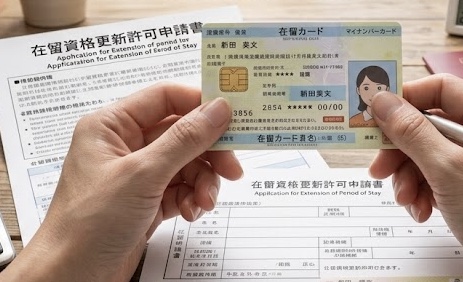
Navigating pregnancy and childbirth in Japan involves more than simply telling your employer that you are pregnant. Depending on your situation, you may need to deal with your municipality, employer, health insurer, Hello Work, Immigration Services, and your home country's embassy or consulate.
The exact forms and procedures can vary depending on your employer, health insurer, municipality, nationality, and whether you are taking maternity or childcare leave.
Here is a practical checklist of the main paperwork foreign workers should know about.
Phase 1: During Pregnancy
1. Submit Your Pregnancy Notification and Get Your Mother-Child Health Handbook
What: After your pregnancy is confirmed, you can submit a pregnancy notification (Ninshin Todoke) to your local municipal office. The municipality then provides a Mother-Child Health Handbook (Boshi Kenko Techo) and information about available prenatal health-check services and subsidies.
Many municipalities also provide vouchers or assistance for pregnancy checkups.
The pregnancy notification is also connected with the current Pregnancy Support Payment (Ninpu no Tame no Shien Kyufu). Under the current system, eligible people generally receive ¥50,000 after pregnancy-support certification and another ¥50,000 for each fetus after the required notification. A singleton pregnancy therefore generally results in ¥100,000 in total, although the exact procedure is handled by the municipality.
Documents: Requirements vary by municipality. You may be asked for identification and other information needed to confirm your identity, residence, and pregnancy.
Timing: Submit the pregnancy notification as soon as reasonably possible after your pregnancy has been confirmed so you can access the available municipal support and prenatal services.
2. Notify Your Employer and Arrange Maternity and Childcare Leave
Tell your employer or HR department about your pregnancy and discuss your expected maternity leave and childcare leave.
There are different legal procedures for:
- Maternity leave (Sanzen Sango Kyugyo)
- Childcare leave (Ikuji Kyugyo)
- Post-Birth Childcare Leave / Childcare Leave at Birth (Sango Papa Ikukyu) where applicable
- Extensions of childcare leave
Do not assume that all of these use the same form or the same deadline.
For ordinary childcare leave, the employee generally needs to apply at least one month before the planned start date. The application period is generally shorter for certain extensions, while Post-Birth Childcare Leave generally requires at least two weeks' notice. Your employer should provide the appropriate forms and confirm the applicable deadline for your situation.
Maternity leave itself follows separate rules under the Labor Standards Act. For an employee who requests it, maternity leave is generally available for up to six weeks before the expected birth (14 weeks for a multiple pregnancy), followed by eight weeks after childbirth, subject to the statutory rules.
Tip: Start the paperwork early instead of waiting until your leave is about to begin.
Phase 2: The Birth and Immediate Registration
3. Submit the Birth Notification Within 14 Days
If your child is born in Japan, a Birth Notification (Shussho Todoke) must generally be submitted within 14 days of the birth.
It can generally be submitted to the municipality where the child was born or the municipality of the person submitting the notification.
Typical document:
- Birth Notification form, including the birth certificate completed by the medical institution
Your municipality may require or request additional documents, so check with the relevant municipal office.
The Mother-Child Health Handbook is also commonly used during the birth-registration process.
Foreign parents should check with their municipality about the correct way to write the child's name. The rules and required documentation can differ depending on the child's nationality and the parents' circumstances, so do not assume that the same Japanese-character rules apply to every foreign child.
Deadline: Within 14 days of birth.
If you miss the deadline, contact the municipal office as soon as possible. Late notification can require additional procedures and may result in a penalty under the law.
4. Arrange the Childbirth Lump-Sum Grant
The Childbirth Lump-Sum Grant (Shussan Ikuji Ichijikin) is generally ¥500,000 per child when the applicable conditions are met, including births at participating medical institutions covered by the relevant Obstetric Medical Compensation System rules.
The amount is generally ¥488,000 per child in cases that do not qualify for the ¥500,000 amount, such as certain births at medical institutions that are not covered by the applicable system.
This amount is not determined by whether the hospital uses the Direct Payment System.
Direct Payment System
Many medical institutions use the Direct Payment System. Under this system, you agree with the medical institution to have the health insurer pay the childbirth benefit directly to the hospital.
If the eligible childbirth costs are less than the amount of the benefit, the difference can generally be claimed from the health insurer.
If you do not use the Direct Payment System, you may generally pay the medical institution yourself and then apply to your health insurer for the benefit.
Possible documents include:
- Direct Payment Agreement, if using the system
- Health insurance information
- Childbirth cost receipt and statement
- Childbirth benefit application, where a separate application is required
- Additional documents for overseas births or other special circumstances
The exact procedure depends on your health insurer and medical institution.
Phase 3: Immigration and Nationality Procedures
5. Apply for the Child's Status of Residence Within 30 Days
If neither parent is Japanese and the child will remain in Japan, the child will generally need a status of residence.
This is not a visa application. The relevant procedure is an Application for Permission to Acquire Status of Residence (Zairyu Shikaku Shutoku Kyoka Shinsei).
The application must generally be submitted to the Immigration Services Bureau within 30 days of the child's birth.
The Immigration Services Agency states that if the child leaves Japan within 60 days of birth, under the applicable conditions, an application for acquisition of status of residence is generally not required.
Typical documents may include:
- Application for Permission to Acquire Status of Residence
- Birth-related documentation
- Certificate showing acceptance of the Birth Notification
- Documents concerning the child's residence
- Parents' passports and residence cards
- Documents relating to the parents' status and circumstances
- Other documents requested by Immigration
The exact document list depends on the child's circumstances and the status of residence being sought. Immigration may request additional documents.
Important: 30 Days vs. 60 Days
These are two different rules and should not be confused.
30 days: This is the general deadline for submitting the child's status-of-residence acquisition application if the child will remain in Japan.
60 days: A foreign child born in Japan can generally remain in Japan for up to 60 days from birth without a status of residence under the relevant rules. If status of residence has not been obtained within that period, the child's residence registration may be deleted and access to administrative services such as National Health Insurance and child allowance can be affected.
Therefore, do not treat 60 days as the application deadline. If an application is required, deal with it within the 30-day period.
6. Report the Birth to Your Home Country's Embassy or Consulate
If neither parent is Japanese, being born in Japan does not by itself give the child Japanese nationality.
You should contact your country's embassy or consulate in Japan to determine how to register the birth under your country's nationality law and how to obtain the child's passport.
The requirements vary significantly between countries.
Documents commonly requested may include:
- Birth certificate or Japanese birth-registration documentation
- Parents' passports
- Marriage certificate, if applicable
- Other nationality-registration documents required by your country
Do this as early as possible because obtaining a foreign passport may be necessary for the child's international travel and some subsequent administrative procedures.
Phase 4: Maternity and Childcare Benefits
7. Apply for Maternity Allowance (Shussan Teatekin)
Maternity Allowance (Shussan Teatekin) is a health-insurance benefit for eligible employees who stop working because of childbirth and meet the applicable requirements.
It is generally paid for qualifying days from 42 days before the expected date of birth through 56 days after childbirth. For a multiple pregnancy, the pre-birth period is generally 98 days.
The amount is generally calculated at two-thirds of the applicable standard remuneration daily amount, rather than simply being 67% of your normal monthly salary.
A common calculation is:
Average standard monthly remuneration for the relevant period ÷ 30 × 2/3
The actual calculation can be more complicated in some circumstances, particularly when the person has been insured for less than 12 months or receives some wages during the leave period.
The benefit is paid by the employee's health insurance provider.
Application: The application normally involves the employee, employer, and medical institution as applicable. Your employer or HR department can provide the appropriate form and help with the employer's section.
Maternity Allowance is separate from the Childbirth Lump-Sum Grant.
8. Apply for Childcare Leave Benefits
Childcare Leave Benefits (Ikuji Kyugyo Kyufukin) are paid through Employment Insurance to eligible employees who take qualifying childcare leave.
The general rate is:
- 67% of the applicable leave-start wage calculation for the first 180 days
- 50% from the 181st day onward
The calculation is based on the applicable Employment Insurance wage calculation, not simply your current monthly salary.
Applications are commonly handled through the employer and Hello Work, although the exact procedure depends on the circumstances.
Documents can include:
- Childcare Leave Benefit application documents
- Employment Insurance documents
- Evidence of the child's birth and relationship to the employee
- Mother-Child Health Handbook or other accepted proof of the child's birth
- Wage information
- Bank account information
- Other documents required by Hello Work
The exact documents and submission schedule should be confirmed with your employer or Hello Work.
9. Check Whether You Qualify for the Post-Birth Leave Support Benefit
Since April 2025, eligible workers may receive the Post-Birth Leave Support Benefit (Shusseigo Kyugyo Shien Kyufukin) in addition to the applicable childcare-leave benefit.
The additional benefit is generally:
13% of the applicable leave-start wage calculation for up to 28 days.
When the 13% benefit is paid together with the applicable 67% childcare-leave benefit, the combined rate can reach 80% of the applicable wage calculation for the qualifying period.
The benefit has conditions. In general, both parents must take at least 14 days of qualifying childcare leave during the relevant period, although there are exceptions, including certain situations where the other parent cannot take leave.
For the mother, the relevant period is structured around the post-birth period and the end of statutory maternity leave. For the father, the relevant period generally begins with the child's birth.
Do not assume that every parent automatically qualifies for the additional 13%.
The application is handled through the Employment Insurance system, commonly with the employer's assistance, and Hello Work determines eligibility.
Phase 5: Social Insurance and Other Paperwork
10. Check Your Social Insurance Premium Exemption
If you are enrolled in employees' health insurance and Employees' Pension Insurance and take qualifying maternity or childcare leave, your health insurance and Employees' Pension premiums can be exempted during qualifying periods under the statutory rules.
Ask your employer or HR department to confirm that the required employer-side procedures have been completed.
This is particularly important because the exemption can significantly reduce the amount you personally have to pay while you are on qualifying leave.
If you are instead enrolled in National Pension as a Category 1 insured person, different rules apply. Japan also has a separate National Pension childcare premium exemption beginning in October 2026 for qualifying people raising a child under one year old.
Therefore, do not assume that the employee social-insurance exemption rules apply to everyone.
11. Check Childcare and Municipal Benefits
After the birth, also check with your municipality for benefits and procedures such as:
- Child allowance (Jido Teate)
- Children's medical expense assistance
- Health insurance enrollment for the child
- Municipal child-health services
- Other local childcare or parenting support
These programs can have their own application procedures and deadlines.
For foreign residents, it is particularly important to make sure the child's residence registration and health-insurance procedures are completed correctly.
Complete Maternity Paperwork Checklist
During pregnancy
- Submit Pregnancy Notification (Ninshin Todoke)
- Obtain Mother-Child Health Handbook
- Check municipal pregnancy-support payments
- Confirm prenatal checkup assistance
- Notify your employer
- Submit maternity-leave paperwork
- Submit childcare-leave paperwork where required
- Confirm your expected leave dates
- Ask HR about health insurance and pension premium exemptions
After birth
- Submit Birth Notification within 14 days
- Obtain documentation confirming acceptance of the Birth Notification if needed
- Arrange the Childbirth Lump-Sum Grant
- Register the child for health insurance
- Apply for child allowance and applicable municipal benefits
- Apply for the child's status of residence within 30 days if required
- Contact your embassy or consulate
- Arrange the child's nationality registration and passport
- Submit Maternity Allowance application
- Submit Childcare Leave Benefit paperwork
- Check eligibility for the Post-Birth Leave Support Benefit
- Confirm social insurance premium exemptions
Key Deadlines at a Glance
| Procedure | General timing |
|---|---|
| Pregnancy Notification | As soon as reasonably possible after pregnancy is confirmed |
| Employer maternity/leave paperwork | Depends on the type of leave; ordinary childcare leave generally requires at least 1 month's notice |
| Post-Birth Childcare Leave application | Generally at least 2 weeks before the planned start |
| Birth Notification | Within 14 days of birth |
| Child's status-of-residence application | Within 30 days of birth if required |
| Child remaining in Japan without status of residence | Generally up to 60 days from birth under the applicable rules |
| Embassy/nationality registration | Varies by country |
| Childbirth Lump-Sum Grant | Procedure depends on the health insurer and payment method |
| Maternity Allowance | Apply through the relevant health insurance procedure |
| Childcare Leave Benefits | Follow the Employment Insurance/Hello Work application schedule |
Final Advice for Foreign Workers
Japan's maternity system involves several different government agencies, and there is no single application that covers everything.
The most important thing is to keep the different procedures separate:
Municipality: pregnancy notification, birth notification, child-related municipal services and benefits.
Employer/HR: maternity leave, childcare leave and social-insurance procedures.
Health insurer: Maternity Allowance and Childbirth Lump-Sum Grant.
Hello Work: Childcare Leave Benefits and the Post-Birth Leave Support Benefit.
Immigration Services: the child's status of residence.
Embassy or consulate: nationality registration and passport.
The two immigration dates that foreign parents should remember are 30 days for the status-of-residence application when one is required, and 60 days for the period during which a foreign child born in Japan can generally remain without a status of residence.
Starting the paperwork early gives you more time to deal with documents, translations, employer procedures, and government requests before deadlines become a problem.
For assistance with Japanese administrative procedures, including maternity-related applications, pension matters, tax procedures, and other services for foreign residents, contact HSB JAPAN for a consultation.