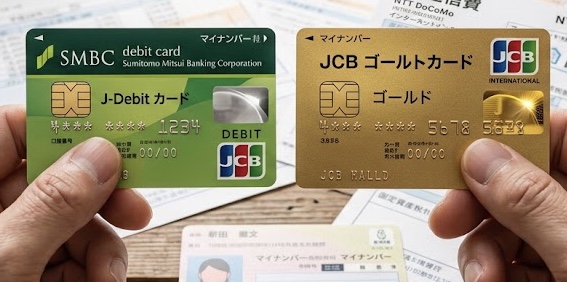
If you have just arrived in Japan and tried to apply for a credit card, you may have been surprised by a rejection.
You may have a good income, a stable job, and a clean financial history in your home country.
So why were you declined?
One important reason is that your credit history from another country generally does not transfer into Japan's domestic credit-information system.
Japan has its own credit-information agencies, and Japanese lenders and credit-card companies use information available through those systems together with their own screening criteria.
That means a newcomer may have little or no Japanese credit history for a lender to review.
This guide explains how credit information works in Japan, what being new to the system actually means, and practical ways to establish a Japanese credit history over time.
How Credit Works in Japan
Japan does not have one universal, consumer-facing credit-score number that every lender uses.
Instead, credit and loan information is held by designated credit-information agencies. Three major agencies are:
| Agency | Main area of coverage |
|---|---|
| CIC | Credit cards, installment sales and other credit transactions |
| JICC | Consumer-finance and other lending information |
| KSC | Personal credit information handled by the banking sector |
These agencies collect information such as credit contracts, balances, payment status, delays and other information specified under their respective systems.
The three agencies are separate organizations, but they also have information-sharing arrangements. For example, CIC, JICC and KSC participate in the CRIN information-sharing network for certain types of information, including certain delinquency information.
So your Japanese credit history is not necessarily confined to one database.
Does Your Foreign Credit History Transfer to Japan?
Generally, your credit history from another country's domestic credit-reporting system does not simply appear in Japan's CIC, JICC or KSC records when you move to Japan.
That does not mean Japanese lenders know nothing about you.
When you apply for credit, the company can consider information you provide in the application as well as information available through credit-information agencies.
For example, an issuer may consider factors such as:
- Income
- Employment
- Employer
- Residence status
- Length of residence
- Address
- Existing credit obligations
- Payment history
- The information contained in your application
The exact screening criteria are determined by each company and are generally not publicly disclosed.
For example, EPOS's membership terms state that application-related information can include items such as employment, address, telephone number and status of residence.
What Does "Super White" Mean?
You may see the Japanese term "Super White" (Super White) when researching Japanese credit.
The term is often used informally to describe a person who has little or no current credit history, particularly in discussions about people whose previous negative information is no longer present in a credit database.
However, "Super White" is not an official CIC status for newly arrived foreign residents.
A newcomer who has never had a Japanese credit card or loan may simply have little or no Japanese credit information available for a lender to review.
That is different from having bad credit.
CIC itself explains that the absence of credit information can be one factor considered by a credit company, but the credit company makes the actual screening decision using its own criteria.
There is therefore no rule saying:
No Japanese credit history = bad credit.
Nor is there a rule saying that a person with no record is automatically suspected of having previously defaulted.
Why Can a First Credit Card Be Difficult?
When you apply for your first Japanese credit card, the issuer has less Japanese payment history available to evaluate.
That can be one factor in the screening process.
But it is important not to assume that a rejection was caused by one specific factor.
Japanese credit-card companies do not generally publish the exact formula used to approve or reject each applicant.
A rejection can therefore happen even when you have:
- A good salary
- A permanent employment contract
- No history of missed payments
- A long residence in Japan
- A good credit history in another country
Your foreign credit history may simply not be part of the Japanese credit-information record used for the application.
It is also not accurate to assume that every rejection of a foreign resident is caused by nationality. Each issuer makes its own decision based on its screening criteria.
Step 1: Start With a Credit Product You Can Actually Manage
Your first goal should not necessarily be to obtain the most prestigious card.
The practical goal is to establish a Japanese credit relationship that you can manage responsibly.
A conventional credit card may work for you, but approval is never guaranteed.
GTN EPOS Card
The GTN EPOS Card is a credit card issued by EPOS Card in cooperation with Global Trust Networks and is specifically aimed at foreign residents.
Its current membership terms state that the card has no enrollment fee or annual fee.
It may therefore be worth considering if you are a foreign resident looking for a Japanese credit card, although approval remains subject to EPOS's screening.
Do not assume that a card marketed toward foreign residents is automatically approved for every newcomer.
Rakuten Card
Rakuten Card is another mainstream Japanese credit-card option.
The availability of English-language services can make it more convenient for some foreign residents, but approval is still determined by Rakuten Card's own screening.
There is no reliable rule saying that simply having a certain income or being employed for a particular number of months guarantees approval.
Deposit-Based Credit Cards
If you have difficulty obtaining a conventional credit card, a deposit-based credit card can be another option.
Instead of receiving a credit limit based only on conventional underwriting, you provide a refundable guarantee deposit under the card's terms.
Nexus Global Card
The Nexus Global Card is specifically marketed to foreign residents.
Nexus states that foreign residents can apply without opening a Japanese bank account by paying a guarantee deposit, and the product is specifically described as a credit card for foreign residents.
This can make a deposit-based card an option worth investigating if you have difficulty obtaining a conventional card.
However, you should always check the current fees, deposit requirements, eligibility conditions and contract terms before applying.
LIFE Deposit Card
Another example is the LIFE Deposit Card, a deposit-based credit-card product.
Its current fee structure should be checked directly with the issuer before applying because fees and product conditions can change.
The important point is that a deposit-based card is still a credit product. It should not be treated as a guaranteed way to obtain future loans or cards.
Does a Deposit Card Build Credit History?
It can, provided that the issuer reports the relevant credit and payment information to a Japanese credit-information agency.
For example, Nexus's terms provide for the registration of application, contract and payment information with CIC.
This is why you should check the issuer's current terms rather than assuming that every deposit card works identically.
Step 2: Use Your Credit Card Responsibly
Once you have a card, the most important thing is not to manufacture debt just to create a credit history.
Use the card for normal purchases that you can afford.
For example:
- Groceries
- Phone bills
- Subscriptions
- Transportation
- Everyday purchases
Then make every required payment by the due date.
The goal is to establish a history of responsible credit use rather than to borrow as much as possible.
Pay on Time
Payment history is important credit information.
CIC and JICC record payment-related information as part of their respective credit-information systems.
A late or missed payment can remain in your credit information for a significant period and may affect future applications.
However, there is no universal rule saying that one late payment automatically prevents you from receiving credit for a particular number of years. The impact depends on the circumstances and the lender's own screening criteria.
You Do Not Need to Carry Debt
You do not need to keep an unpaid balance simply to "build credit."
There is no Japanese rule requiring you to pay interest or maintain revolving debt in order to establish a credit history.
If you use a credit card, borrow only what you can comfortably repay and make the required payments on time.
Step 3: Be Careful With Phone Installment Plans
A mobile phone handset purchased through an installment arrangement can also create credit information.
This is different from simply paying your monthly mobile-phone service bill.
If the handset itself is financed through an installment credit arrangement reported to CIC, the contract and payment history can appear in your CIC information.
That means paying the installments on time can establish payment history.
However, you should not take out a phone installment plan solely for the purpose of building credit.
If you actually need a new phone and the installment arrangement makes financial sense for you, it can be one way a Japanese credit relationship is established.
What About Utility Bills?
This is an important distinction.
Paying your electricity, gas, water or other ordinary bills on time is obviously good financial management.
But ordinary utility payments made directly from your bank account are not normally registered with CIC or JICC as credit information. JICC specifically states that utility and tax payments made directly, such as by bank-account withdrawal, are not registered.
Therefore:
Putting the electricity bill in your name does not, by itself, build your CIC credit history.
If you pay a utility bill using a credit card, the credit-card account itself may generate credit information. That is different from the utility company reporting your normal payment history to the credit bureau.
What Can Affect a Credit-Card Application?
There is no universal Japanese approval formula.
However, an issuer may consider information such as:
Residence Status
Your residence status and remaining period may be considered as part of the issuer's overall screening.
There is no universal rule that says you must have one year remaining on your residence card.
Different companies can have different requirements and policies.
Employment and Income
Your employer, employment situation and income can be relevant to an application.
Stable employment may provide useful information to a lender, but it does not guarantee approval.
Japanese Address
A Japanese address is normally necessary for products that are intended for residents of Japan.
The length of time you have lived at your current address is not a universal credit-building requirement, however.
There is no general rule saying that living at an address for six or twelve months automatically improves your credit history.
Japanese Bank Account
Some cards require a Japanese bank account for automatic payments.
Others may have different arrangements.
Check the individual issuer's requirements before applying.
Japanese Telephone Number
A Japanese telephone number may be requested for contact or application verification, depending on the issuer.
Again, requirements vary by product.
Be Careful With Multiple Applications
Applying for several credit cards at the same time is generally not a good strategy.
Credit-card application information can itself be registered with credit-information agencies for a limited period.
CIC states that application-related information is retained for six months. JICC also has a six-month retention period for application information.
This means that several applications made close together can be visible to participating companies during that period.
Whether this affects an individual application depends on the lender's own screening criteria.
A sensible approach is to apply for products that you genuinely have a reasonable basis to use rather than submitting applications indiscriminately.
What Happens If Your Application Is Rejected?
Do not assume that a rejection means you have "bad credit."
If you are rejected, you generally will not know the exact reason unless the issuer provides one.
Possible factors can include information in the application, existing obligations, credit information, residence status, income, employment and the company's internal screening criteria.
You can also request disclosure of your own credit information from the relevant credit-information agency.
CIC provides a disclosure service that allows individuals to check information held in their CIC file, including contracts with member companies and payment status.
JICC likewise provides a disclosure service for information such as contracts, balances, delays and other registered information.
Checking your own records can be useful if you are concerned that an old payment problem or incorrect information may be affecting applications.
How Long Does It Take to Build Credit in Japan?
There is no official Japanese timetable saying that you need six months, one year, three years or any other fixed period before you can obtain a particular card or loan.
A person may receive a mainstream card relatively soon after arriving in Japan, while another applicant may have difficulty even after several years.
The important factors are your individual circumstances and the requirements of the particular lender.
Instead of following an artificial timeline, focus on building a clean and consistent record:
When You Are New
- Establish your residence and employment situation.
- Apply selectively for credit products for which you appear eligible.
- Make every required payment on time.
- Avoid unnecessary applications.
After You Have Established Credit
- Continue using credit responsibly.
- Keep accounts in good standing.
- Check your credit information if you have concerns about your record.
- Apply for additional products only when you actually need them.
Over the Long Term
A longer history can give lenders more information about your financial behavior.
But it does not create an automatic right to a particular credit card, loan, gold card or mortgage.
Each lender makes its own decision.
What About Permanent Residence?
Permanent residence can change how a lender views an applicant's residence situation, because it does not have the same fixed expiration period as a temporary status of residence.
However, permanent residence is not a guarantee of approval.
Likewise, there is no rule saying that you need permanent residence before you can obtain a credit card, car loan or mortgage in Japan.
Lenders have their own requirements.
What Actually Matters Most?
If you are starting your Japanese credit history from zero, keep things simple.
1. Establish a Japanese Credit Relationship
Start with a card or other credit product for which you meet the eligibility requirements.
2. Use Credit for Things You Can Afford
Do not borrow money simply to create a credit record.
3. Pay on Time
Avoid missed and late payments.
4. Avoid Unnecessary Applications
Multiple recent applications can remain visible in credit-information systems for a period of time.
5. Check Your Credit Information If Necessary
If you believe an old account or payment problem may be affecting you, request your own credit-information disclosure.
6. Give It Time
There is no magic number of months or years that guarantees approval.
A responsible Japanese credit history develops through actual credit relationships and payment behavior over time.
The Bottom Line
Your credit history from another country generally does not transfer directly into Japan's domestic credit-information system.
That does not mean you have "bad credit." It may simply mean that a Japanese lender has little Japanese credit information available when you make your first application.
Japan's credit system is based on information held by organizations such as CIC, JICC and KSC, together with each lender's own screening process.
If you are new to Japan:
- Choose credit products carefully.
- Use them only for purchases you can afford.
- Make every required payment on time.
- Do not take on unnecessary debt just to build a record.
- Avoid submitting many applications at once.
- Check your credit information if you need to understand what lenders may see.
There is no guaranteed shortcut to approval, but responsible use of Japanese credit products can help you establish a Japanese credit history over time.
If you are a foreign resident in Japan and need help with Japanese tax procedures, resident tax, pension matters, or other administrative issues, contact HSB JAPAN for a professional consultation.