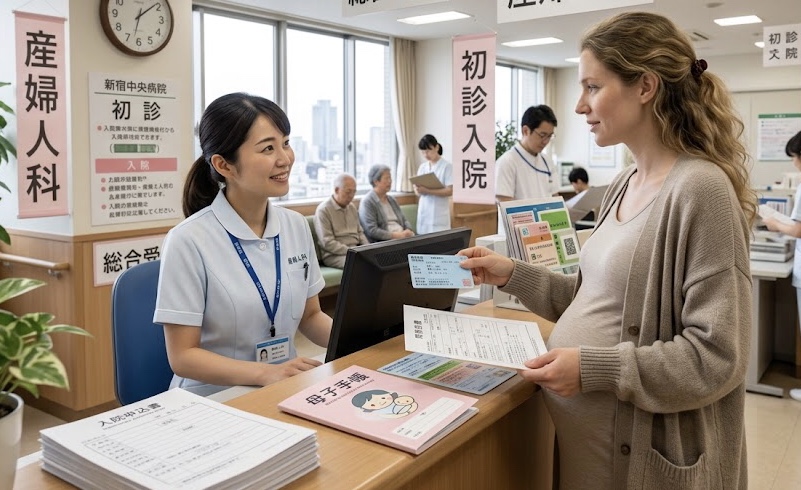
Giving birth in Japan can be a very different experience from what you may be used to in your home country. From registering your pregnancy and receiving the Mother and Child Health Handbook to choosing a hospital, preparing for delivery, and handling the final bill, there are several steps foreign residents should understand in advance.
The process is generally straightforward, but details such as hospital policies, language support, pain-management options, required items, and costs can vary significantly between facilities.
Here is what to expect when giving birth in Japan as a foreign resident.
1. Register Your Pregnancy and Get the Mother and Child Health Handbook
Once your pregnancy has been confirmed, you should notify your municipality of your pregnancy. The municipality can then issue a Mother and Child Health Handbook (Boshi Kenko Techo), along with information about prenatal checkups and available support.
The handbook records important information about the mother's pregnancy and postpartum health as well as the child's health and development. It can also contain information about vaccinations and other child-health services, so keep it somewhere safe and bring it to medical appointments.
If you are unsure where to submit your pregnancy notification, contact your municipal office or local public health center.
2. Start Prenatal Checkups Early
Japan has a standard framework recommending approximately 14 prenatal health checkups during pregnancy. The recommended frequency generally increases as the pregnancy progresses:
- Up to 23 weeks: approximately once every four weeks
- 24–35 weeks: approximately once every two weeks
- From 36 weeks until delivery: approximately once a week
Municipalities provide support for prenatal checkups, but the exact subsidy system and amount can differ depending on where you live. The examinations covered and the amount you may have to pay yourself can also depend on the facility and the services provided.
Your municipality will normally provide information about the available prenatal checkup subsidies or vouchers when you receive your Mother and Child Health Handbook.
3. Choose Your Hospital or Birth Facility Early
You may give birth at a hospital, obstetrics and gynecology clinic, or, where available and appropriate, a midwife-led birth facility.
Do not assume that every facility has the same admission procedure. Some hospitals require you to register for delivery well in advance, while others have different procedures or deadlines.
For this reason, it is a good idea to ask your preferred facility about delivery registration as soon as possible rather than waiting until late pregnancy.
When choosing a facility, ask about:
- Whether they accept new patients for delivery
- Delivery registration deadlines
- Language support
- Epidural availability
- Whether an epidural must be booked in advance
- Whether family members can attend the birth
- Visitor rules
- Room options
- What you need to bring
- Estimated delivery costs
- Available payment methods
- How the Childbirth Lump-Sum Grant is handled
Language support is particularly important if you are not comfortable communicating in Japanese. A facility may accept foreign patients but still have limited English or other-language support.
4. Prenatal Subsidies Can Vary by Municipality
The Japanese government recommends approximately 14 prenatal checkups, but the financial support provided to pregnant residents is administered locally.
This means the amount of assistance, the number and type of vouchers, and the conditions for using them can vary between municipalities.
If you receive prenatal care outside your municipality, check the rules before your appointment. Depending on the local system and the medical facility, you may need to pay first and follow a reimbursement procedure later.
Multiple pregnancies may also qualify for additional support in some municipalities, but this is not something you should assume nationwide. Check with your municipality for the rules that apply to you.
5. Understand Your Pain-Relief Options
One of the biggest differences many foreign residents notice is that epidural childbirth is not offered in every Japanese maternity facility.
Whether an epidural is available depends on the hospital or clinic. Some facilities offer it routinely, while others do not offer it or only provide it under particular conditions. Planned epidurals may also require advance registration.
If pain relief is important to you, do not wait until you are admitted to ask.
During your pregnancy, ask your hospital:
- Do you offer epidural anesthesia?
- Is it available 24 hours a day?
- Does it need to be booked in advance?
- Is it available for planned or emergency delivery?
- How much does it cost?
- Are there medical conditions that would prevent you from receiving it?
You can also discuss other pain-management options and your preferences for labor and delivery with your doctor or midwife.
Remember that asking for a particular form of pain relief does not guarantee that it will be medically appropriate or available at that facility.
6. Ask About Episiotomy and Other Delivery Procedures
If you have preferences regarding procedures during labor, discuss them with your doctor or midwife before delivery.
Policies and medical practices can differ between facilities, and some procedures may become medically necessary depending on the circumstances during delivery.
Rather than assuming that a particular procedure will or will not be performed, ask the hospital how it normally handles:
- Episiotomy
- Assisted delivery
- Emergency procedures
- Cesarean sections
- Pain management
- Birth plans
Having this conversation before labor can make it easier to understand what may happen if the situation changes.
7. What Should You Bring to the Hospital?
Every hospital has its own admission and maternity-bag requirements, so ask for the facility's packing list before your due date.
Commonly requested items may include:
- Mother and Child Health Handbook
- Health insurance information
- Hospital or patient registration card
- Prenatal checkup documents
- Maternity clothes and underwear
- Pajamas or comfortable clothing
- Towels
- Slippers
- Toiletries
- Phone and charger
- Any personal medication
- Items needed for breastfeeding, if applicable
Some hospitals provide maternity or hospitalization sets for an additional fee.
Baby supplies also vary. Some facilities provide items such as diapers and basic newborn supplies, while others require parents to bring them or purchase a hospital package.
Do not assume that everything will be provided. Ask the hospital exactly what you need to bring for both yourself and the baby.
8. How Long Will You Stay in the Hospital?
Hospital stays after childbirth in Japan can be longer than what some foreign residents are accustomed to.
The length of the stay depends on the type of delivery, the facility's policy, and the health of the mother and baby. A vaginal delivery and a cesarean delivery may have different standard schedules.
Your hospital should tell you the expected admission and discharge schedule before delivery.
The stay may also include monitoring of the mother's recovery, newborn examinations, breastfeeding support, and guidance on caring for the baby.
9. Understand the Childbirth Cost and ¥500,000 Grant
Normal childbirth is generally not covered in the same way as ordinary medical treatment under public health insurance. However, people who meet the eligibility requirements and are enrolled in Japan's public health insurance can generally receive the Childbirth Lump-Sum Grant (Shussan Ikuji Ichijikin).
The current standard amount is ¥500,000 per child for qualifying births covered by the applicable conditions. A lower amount of ¥488,000 applies to certain births that do not meet the conditions for the additional amount associated with the Japan Obstetric Compensation System.
The grant does not mean that every delivery will cost exactly ¥500,000.
Your actual bill depends on the hospital, room type, delivery circumstances, additional services, and other charges. If the total cost is higher than the grant, you pay the difference.
If the cost is lower, the difference may be paid to you through your health insurer.
10. How the Childbirth Lump-Sum Grant Is Paid
There are several ways the Childbirth Lump-Sum Grant can be handled.
With the Direct Payment System, the health insurer pays the maternity facility directly. This means the amount you need to pay the hospital can generally be reduced by the amount of the applicable grant.
Other arrangements include a receiver-agent system or reimbursement after you have paid the medical facility yourself.
Not every facility necessarily uses the same payment arrangement, so confirm the procedure with your hospital before delivery.
Also ask about:
- Whether the Direct Payment System is available
- Whether a deposit is required
- When the final payment is due
- What happens if the delivery costs exceed the grant
- What payment methods the hospital accepts
Do not assume that a particular deposit amount or payment method applies to every Japanese hospital.
11. Hospital Food, Rooms, and Baby Care
The hospital experience can also differ from what you may be used to.
Depending on the facility, you may have:
- A private room or shared room
- Hospital-provided meals
- Breastfeeding guidance
- Newborn examinations
- Assistance with bathing and newborn care
- Rooming-in with your baby
- Scheduled nursery care
The amount of time the baby spends in the nursery and how much assistance you receive with newborn care varies by hospital.
Visitor policies also differ, particularly depending on the hospital's current rules and circumstances. Ask about visitors, partners, and whether someone can stay with you during labor or after delivery.
12. Prepare for Language Differences
Language can be one of the biggest practical challenges for foreign residents giving birth in Japan.
Even if your hospital provides some English-language assistance, you should not assume that every doctor, nurse, or administrative staff member will be able to communicate comfortably in English.
Before delivery, find out:
- Whether English or another language is supported
- Whether interpreters are available
- Whether interpretation costs extra
- Whether your partner or family member can interpret
- Whether you can receive important documents in a language you understand
If you are not confident in Japanese, consider preparing a simple list of important medical terms and your preferences in Japanese before your due date.
It is also useful to understand the Japanese terms for common procedures, medications, delivery methods, and pain-relief options.
13. Communication During Labor May Be Different
Medical communication styles can vary between countries and between individual doctors.
If you have specific preferences about pain relief, delivery procedures, breastfeeding, rooming-in, or other aspects of your hospital stay, discuss them in advance rather than assuming the hospital will automatically follow the practices you are familiar with from your home country.
A written birth plan can be useful, but medical staff may need to change the plan depending on the condition of the mother and baby.
The most important thing is to make sure you understand the options available at your particular facility before delivery.
14. A Simple Pregnancy Preparation Checklist
Around 20 weeks
- Confirm your delivery hospital or birth facility
- Check the delivery registration deadline
- Ask about epidural and other pain-relief options
- Confirm language support
- Ask about expected delivery costs
- Check how the Childbirth Lump-Sum Grant will be handled
- Ask whether a deposit is required
- Request the hospital's admission and packing list
Around 30 weeks
- Prepare your hospital bag
- Prepare the baby's clothing and supplies
- Confirm your admission procedure
- Confirm payment arrangements
- Review visitor and partner rules
- Prepare important Japanese medical terms or translation support
- Discuss any birth preferences with your doctor or midwife
Before your due date
Keep your Mother and Child Health Handbook and important medical and insurance documents easily accessible.
If you have questions about costs, payment procedures, or what you need to bring, ask the hospital before labor begins rather than trying to find out after you are admitted.
What Foreign Residents Should Know Before Giving Birth in Japan
Giving birth in Japan involves several systems that foreign residents may not be familiar with, but most of the important steps can be prepared in advance.
The key things to remember are:
- Notify your municipality of your pregnancy and obtain your Mother and Child Health Handbook.
- Use the prenatal checkup support provided by your municipality.
- Register with your preferred delivery facility early and check its specific deadline.
- Confirm language support before committing to a hospital.
- Ask specifically about epidural and other pain-relief options if they matter to you.
- Get the hospital's exact packing list instead of assuming what will be provided.
- Check the hospital's delivery fees, deposit requirements, and payment methods.
- Understand how the ¥500,000 Childbirth Lump-Sum Grant will be handled.
- Ask about visitor, partner, rooming-in, and newborn-care policies.
- Discuss your birth preferences with your medical team before delivery.
The Japanese maternity system has many standardized elements, but the actual experience can differ considerably from one hospital or municipality to another. For foreign residents, checking these facility-specific details early can make the process much easier to navigate.