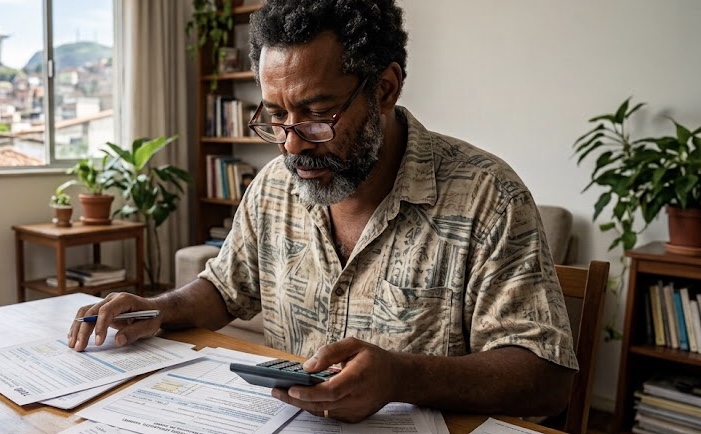
If you are planning to leave Japan permanently, leaving the country does not automatically cancel your Japanese resident-tax obligations.
This is particularly important if you leave Japan between January and June, because resident tax is based on your situation on January 1, while the following fiscal year's tax amount is normally calculated and notified later in the year.
That means you can leave Japan, cancel your residence registration, and still receive a resident-tax bill after you have already gone overseas.
This guide explains what happens, what you may need to do before leaving, and how to avoid having an unpaid resident-tax balance after your departure.
The Fundamental Rule: January 1 Determines Resident-Tax Liability
Individual Resident Tax (Juminzei) is a local tax consisting primarily of municipal and prefectural resident tax.
The basic rule is:
If you are considered a resident of a municipality on January 1, that municipality generally assesses resident tax for that fiscal year based on your income from the previous calendar year.
Leaving Japan later in the year does not normally cancel that liability.
For example:
If you are living in Yokohama on January 1, 2026, and then permanently leave Japan in February 2026, you can still be liable for the 2026 fiscal year's resident tax, which is based on your 2025 income.
Yokohama City specifically confirms that people who leave Japan during the year remain liable for the resident tax for that fiscal year.
This creates an important timing problem
Resident tax for a fiscal year is generally notified around June.
Therefore, someone who leaves Japan in February, March, April, or May may leave the country before receiving the bill for the new fiscal year's resident tax.
That does not make the tax disappear.
Why January–June Departures Are Particularly Important
Consider this example:
- You leave Japan on February 10, 2026.
- You were resident in Japan on January 1, 2026.
- Your municipality therefore assesses your 2026 resident tax based on your 2025 income.
- But the 2026 resident-tax notice may not be issued until June 2026.
- You are already living overseas when the notice is issued.
This is why municipalities advise people leaving Japan to make arrangements for receiving and paying their resident tax after departure.
There can also be another balance involved: the remaining installments of the previous fiscal year's resident tax.
So someone leaving early in the year may need to deal with both:
- Any unpaid balance of the current resident-tax bill; and
- The new fiscal year's resident tax that will be assessed and notified around June.
Option 1: Appoint a Tax Agent in Japan
One common solution is to appoint a Tax Agent (Nozei Kanrinin).
A tax agent is a person or organization in Japan who handles tax-related notices and procedures on your behalf.
Depending on the municipality and your circumstances, the tax agent may:
- Receive your resident-tax notices.
- Receive payment slips.
- Make payments on your behalf.
- Handle communications with the municipal tax office.
- Deal with other tax-related procedures after you leave Japan.
A tax agent does not simply become responsible for your tax debt. The underlying tax liability remains yours.
Who can be a tax agent?
The exact requirements are determined by the relevant tax authority, but a tax agent can generally be an individual or organization located in Japan.
For example, this could potentially be:
- A family member.
- A friend.
- A colleague.
- A professional tax service.
- Another person or organization accepted by the municipality.
Some municipalities specifically allow a corporation to act as a tax agent.
When should you appoint one?
Do it before leaving Japan if you expect to have tax obligations after your departure.
There is no universal nationwide rule requiring everyone to submit the appointment exactly 10 days before departure. The procedure and timing can vary by municipality.
Contact your city, ward, town, or village tax office before departure and ask for the appropriate Nozei Kanrinin procedure.
Option 2: Arrange Payment Before You Leave
A tax agent is not necessarily the only solution.
Depending on the municipality and your circumstances, you may be able to arrange payment before departure, including paying an estimated amount of resident tax that has not yet formally been notified.
Some municipalities have procedures allowing taxpayers who are leaving Japan to make an estimated/prepayment arrangement (Yonou).
The exact procedure varies, so you should contact your municipal tax department before departure.
Do not assume that you can simply calculate the amount yourself and transfer money to the municipality without first contacting them.
If You Are an Employee: Understand Special Collection
Most employees have resident tax collected directly from their salary.
This is called:
Special Collection (Tokubetsu Choshu)
The normal resident-tax collection cycle is generally June through May of the following year.
For example, resident tax assessed for fiscal year 2026 is normally collected from June 2026 through May 2027.
If you leave your job, your employer must report the change to the municipality and handle the remaining special-collection balance according to the applicable rules.
Leaving Your Job Between January and April
If you leave your employer during January through April, the remaining special-collection balance is generally subject to lump-sum collection from your final salary or retirement allowance, subject to the applicable collection rules and whether sufficient payment is available.
This is why someone leaving Japan in February, for example, may see a substantial resident-tax deduction from their final paycheck.
However, this does not necessarily settle the resident tax that will be newly assessed in June.
That is a crucial distinction.
Example
Suppose you leave your Japanese employer in February 2026.
- Your employer may collect the remaining balance of the resident tax already being collected through your salary.
- But because you were resident on January 1, 2026, you can also be assessed 2026 fiscal-year resident tax based on your 2025 income.
- That new tax is generally notified around June.
- You therefore may still need a way to receive and pay the June tax notice after leaving Japan.
Municipal guidance specifically warns employers and departing foreign employees about this situation.
What About Leaving in May?
May requires special attention because May is the final month of the normal June–May special-collection cycle.
Therefore, do not treat January through May as one identical rule.
The exact amount collected from your final salary and the treatment of any remaining balance depend on your departure/retirement date and the municipality's collection procedure.
If you leave in May, ask your employer's payroll department and the municipal tax office to confirm:
- How much resident tax remains.
- How much will be deducted from your final salary.
- Whether anything will remain payable after departure.
- Whether you need a tax agent for the new fiscal year's tax.
Leaving Between June and December
If you leave Japan after the new resident-tax notice has been issued, the situation is generally easier because you can already see the amount you owe.
For example, if you leave Japan in September:
- Your resident-tax bill for that fiscal year has normally already been issued.
- You can pay the remaining amount before leaving; or
- If you will still have unpaid tax after departure, you can arrange an appropriate payment method, including a tax agent where required.
Some municipalities explicitly advise people leaving Japan to pay the remaining tax before departure or appoint a tax agent if payment will continue after departure.
What Happens If You Leave Japan on January 2?
This is one of the most important examples to understand.
Suppose:
- January 1, 2026: You are resident in Japan.
- January 2, 2026: You permanently leave Japan.
You do not escape the 2026 resident-tax liability merely because you left one day later.
Your 2026 resident tax is generally based on your 2025 income and your status on January 1, 2026.
Municipal guidance confirms that leaving Japan on or after January 2 does not by itself eliminate the resident-tax obligation for that fiscal year.
What Happens If You Leave Before January 1?
The situation can be completely different.
If you genuinely cease to be resident in Japan before January 1 and are not considered a resident of the municipality on the January 1 assessment date, you may not be subject to that municipality's resident tax for the new fiscal year.
However, this depends on your actual residency situation, not simply the date you buy an airline ticket.
Municipalities can consider whether you actually ceased residing in Japan.
Therefore, if you are leaving around the end of December, confirm your specific situation with your municipality.
What Happens If You Do Not Pay?
Leaving Japan does not erase an outstanding resident-tax liability.
Unpaid tax can result in:
- Delinquent charges under the applicable rules.
- Collection procedures by the municipality.
- Problems when dealing with the municipality in the future.
Do not assume that moving overseas makes the debt disappear.
What About Your Future Visa?
Do not assume that every unpaid resident-tax bill automatically results in visa cancellation or rejection.
Immigration decisions depend on the particular status and application.
However, tax compliance can be relevant to some immigration procedures, particularly applications where financial and tax compliance history is examined.
The safest approach is simple:
Pay what you owe and keep proof of payment.
Resident Tax Is Different From Income Tax
Do not confuse resident tax with your national income tax.
They operate under different systems.
Income Tax
Income tax is administered by the National Tax Agency (NTA) and is generally based on your taxable income for the relevant calendar year.
If you leave Japan, you may also have separate income-tax procedures, including the possible need to appoint an income-tax tax agent if you have continuing Japanese tax obligations.
Resident Tax
Resident tax is administered by your municipality and is generally determined based on your status on January 1 and your previous year's income.
Therefore, leaving Japan can require you to deal with both systems separately.
Appointing a tax agent for income tax does not automatically mean that every resident-tax procedure has been completed. Check with your municipality separately.
A Practical Example
Imagine a foreign employee earns ¥6,000,000 during 2025 and lives in Japan on January 1, 2026.
They resign and permanently leave Japan on February 15, 2026.
What happens?
- Their 2025 income is used to calculate their 2026 resident tax.
- They leave Japan in February.
- Leaving Japan does not cancel the 2026 resident-tax liability.
- Their employer deals with the remaining balance of the resident tax already being collected from their salary.
- Depending on the timing, applicable rules, and available final salary/retirement payment, the remaining balance may be collected in a lump sum.
- The 2026 resident-tax notice is subsequently issued around June.
- The employee is already overseas.
- They therefore need to have made arrangements for receiving and paying that new bill.
- That could involve appointing a tax agent or another payment arrangement accepted by the municipality.
This is the situation that catches many departing foreign workers by surprise.
Your Pre-Departure Checklist
If you are leaving Japan between January and June, do the following before you leave:
1. Contact your employer
Ask:
- How much resident tax is currently being deducted?
- How much remains unpaid?
- Will the remaining amount be deducted from my final salary?
- Will anything remain payable after my employment ends?
2. Contact your municipality
Ask the municipal tax department:
- Am I subject to resident tax for the new fiscal year?
- When will my new tax notice be issued?
- Do I need to appoint a tax agent?
- Can I make a prepayment?
- What forms do I need to submit?
- How can payment be made from overseas?
3. If necessary, appoint a tax agent
Submit the municipality's required Nozei Kanrinin form before departure.
Do not rely on a generic nationwide deadline. Follow the instructions of your municipality.
4. Keep copies of everything
Keep:
- Resident-tax notices.
- Payment slips.
- Payment receipts.
- Final salary statement.
- Tax-agent documentation.
- Employer correspondence.
- Municipal correspondence.
5. Give your tax agent enough information
If someone is handling your tax affairs after you leave, make sure they know:
- Which municipality you dealt with.
- Your tax account/reference information.
- When the next tax notice is expected.
- How much money has been set aside for payment.
- How to contact you overseas.
The Bottom Line
Leaving Japan does not automatically eliminate resident tax.
The key date is January 1.
If you are considered a resident of a municipality on January 1, you can generally be liable for that fiscal year's resident tax even if you leave Japan shortly afterward.
The biggest problem for people leaving between January and June is timing: the new resident-tax bill is normally issued around June, meaning you may be overseas when it arrives.
If you are leaving Japan permanently:
- Check your resident-tax balance with your employer.
- Ask how much will be deducted from your final salary.
- Contact your municipality before departure.
- Ask whether you need to appoint a Tax Agent.
- Ask whether an estimated/prepayment arrangement is available.
- Keep proof of every payment and tax procedure.
Most importantly, don't assume that paying the final resident-tax deduction from your last paycheck automatically settles all resident tax that can arise from your January 1 status.
For official guidance, contact the tax department of your city, ward, town, or village. The exact procedures and forms can vary between municipalities. For income-tax matters after leaving Japan, consult the National Tax Agency or a qualified tax professional.
If you need personalized assistance with Japanese tax procedures, resident tax, or other departure-related matters, contact HSB JAPAN for a professional consultation.