You are leaving Japan. You have sorted out your pension, your tax refund, and your flight. But there is a category of loose ends that many foreign workers only discover after they have already left: the financial infrastructure of daily life that does not automatically shut down when you board a plane.
Your Japanese bank account, credit cards, phone contract, utility autopayments, and subscriptions are all connected to your Japanese address and, in some cases, your residence status. When you move overseas, these services do not necessarily terminate automatically. Some may become unavailable, while others may continue generating payments and obligations that are difficult to resolve from abroad.
This article provides a practical checklist of what to close, what to cancel, and what to confirm before leaving Japan. It focuses on financial matters that can cause problems later if ignored, particularly if you intend to claim a pension lump-sum withdrawal payment or recover the income tax withheld from it.
Why Your Bank Account Cannot Simply Be Abandoned
One of the most important items on your departure checklist is your Japanese bank account. Many foreign residents assume they can leave their account open, receive a final salary payment, and withdraw the money later. That assumption can be risky.
Japanese banks have different policies regarding customers who move overseas. Some require customers to close their accounts before departure, while others may allow accounts to remain open under specific conditions. Certain institutions offer procedures for customers who become non-residents, but restrictions may apply to account services and transactions.
For example, Japan Post Bank and SBI Shinsei Bank have specific procedures for customers leaving Japan. You should never assume that your bank will allow you to continue using your account normally after you become a non-resident.
This matters particularly if you are expecting outstanding salary payments, utility refunds, or other transfers after departure.
It is also important to distinguish between your pension lump-sum withdrawal payment and the tax refund associated with it:
- Pension lump-sum withdrawal payment: The Japan Pension Service has procedures for paying eligible lump-sum withdrawal payments to overseas bank accounts, subject to its requirements. You do not necessarily need to retain a Japanese bank account to receive this payment.
- Income-tax refund: The 20.42% withheld from qualifying Employees' Pension lump-sum withdrawal payments is handled separately by the National Tax Agency. If you have left Japan, you generally need to follow the tax-agent procedure to receive the refund.
Therefore, do not keep or close your Japanese bank account based on assumptions about pension payments. Confirm the payment arrangements with the Japan Pension Service and the tax-refund arrangements with the relevant tax office.
If you intend to keep your account open, contact your bank before departure and confirm whether it permits non-residents to maintain accounts, what restrictions apply, and whether you need to update your registered address.
If you are leaving permanently and no longer need the account, closing it before departure is generally the simpler option, provided you have dealt with outstanding payments and transfers.
Credit Cards and Autopayments: Cancel or Update Before You Go
Japanese credit cards are often linked to a Japanese bank account for automatic monthly payments. Leaving Japan without checking your card arrangements can create avoidable problems.
Credit-card issuers have different rules for customers who move overseas. Some require cardholders to maintain a Japanese residential address, while others may have different arrangements. Contact your issuer before departure to confirm whether your card can remain active after you become a non-resident.
One important rule is to settle outstanding balances and confirm that pending transactions have been accounted for before closing the bank account used for automatic payments.
If the account is closed while a credit-card balance remains, the automatic debit may fail. This can result in late-payment charges, collection activity, and problems with future credit applications in Japan.
Before cancelling your card, identify every recurring payment attached to it. These may include:
- Electricity, gas, and water bills.
- Mobile phone and internet bills.
- Streaming services and other subscriptions.
- Software and application subscriptions.
- Insurance premiums and other recurring payments.
Change the payment method or cancel each service before closing the associated card or bank account. Remember that some services use direct bank debits rather than credit-card payments, so cancelling your card alone will not necessarily stop them.
If you use a Japanese mobile phone contract with device instalments, check the remaining balance before cancelling the service. Cancelling your mobile contract does not necessarily cancel your separate device instalment agreement. You may still be required to pay the outstanding instalments after the service ends.
Unpaid balances can remain enforceable after you leave Japan, so make sure you understand how any remaining payments will be collected.
The Moving-Out Notification: The Step That Affects Everything Else
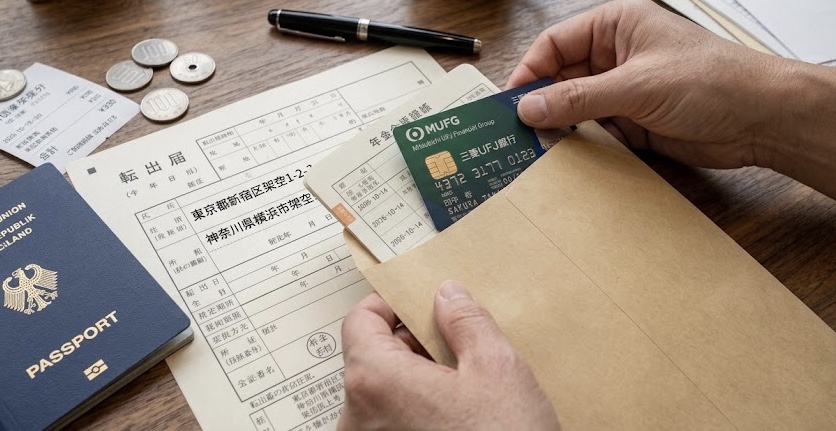
The moving-out notification (tenshutsu todoke) is an important administrative step when permanently leaving Japan.
If you are registered as a resident in Japan and intend to move overseas permanently, you generally need to submit a moving-out notification to your municipal office. This removes you from the Japanese resident register and affects your municipal, pension, and other administrative arrangements.
The date your resident registration is removed is particularly important for pension purposes.
If you intend to claim a pension lump-sum withdrawal payment, you must meet the applicable eligibility conditions, including no longer being covered by the Japanese pension system.
There is an important distinction concerning re-entry permits.
If you leave Japan with a valid re-entry permit but do not submit a moving-out notification, you generally remain registered as a resident and continue to be treated as covered by the relevant Japanese pension system during the permitted period. You cannot simply leave Japan temporarily and claim a pension lump-sum withdrawal payment while your pension coverage continues.
However, if you submit the moving-out notification and your resident registration is removed before departure, you may be eligible to claim the lump-sum withdrawal payment after leaving Japan, provided you satisfy the other eligibility requirements. Having a valid re-entry permit does not automatically prevent a claim when the moving-out notification has been properly submitted.
The pension lump-sum withdrawal application generally has a two-year deadline, calculated according to the applicable rules governing the end of pension coverage and departure.
If you are leaving permanently, confirm the notification procedure and the date your resident registration will be removed with your municipal office.
Official source: Japan Pension Service — Important points when claiming a lump-sum withdrawal payment.
What About Japan Post Bank and Other Institution-Specific Rules?
Different financial institutions have different procedures for customers leaving Japan. You should confirm your particular bank's requirements rather than relying on general advice.
Japan Post Bank, for example, provides procedures for customers who are leaving Japan and need to close their accounts. If you cannot visit a branch personally, ask whether a representative can handle the closure on your behalf and what documentation is required.
Do not assume that a standard power of attorney or Letter of Proxy will automatically be accepted. The bank may require specific documents, identity verification, or other arrangements.
Other banks may offer online account closure, mail-in procedures, or require customers to visit a branch. Some institutions may require you to notify them of your overseas address or close the account when your residential status changes.
Before leaving, ask your bank:
- Whether you can keep your account after becoming a non-resident.
- Whether you must close it before departure.
- Whether a representative can close it after you leave.
- Whether online banking and international transfers will remain available.
- How outstanding payments and incoming transfers will be handled.
- What documents are required to close the account.
The important point is that the procedure for one bank does not necessarily apply to another.
Official information: Japan Post Bank — Information for Foreign Customers.
A Practical Sequence
If you are leaving Japan permanently, the following sequence can help you avoid blocked payments, unresolved obligations, and unnecessary complications.
- Check your bank's non-resident policy. Contact your bank before departure and establish whether you can retain your account or must close it.
- Confirm your pension payment arrangements. If you intend to claim a lump-sum withdrawal payment, check the Japan Pension Service's overseas payment requirements. Do not assume you need a Japanese bank account.
- Arrange your tax-refund procedure. If you intend to recover the 20.42% withholding from an eligible Employees' Pension lump-sum withdrawal payment, arrange the required tax-agent procedure separately.
- Settle outstanding financial obligations. Pay credit-card balances, check pending transactions, and identify any remaining loan or device instalments.
- Review recurring payments. Cancel or change the payment arrangements for utilities, phone services, internet, insurance, and subscriptions.
- Submit your moving-out notification. If you are leaving permanently, complete the procedure with your municipal office and confirm the date your resident registration will be removed.
- Close or retain your bank account. Follow your bank's instructions and make sure outstanding payments and incoming transfers have been dealt with.
- Keep copies of everything. Retain account closure confirmations, card cancellation records, payment receipts, tax documents, and your moving-out notification records.
The exact order may vary depending on your bank, employment arrangements, outstanding payments, and departure date. In particular, arrange your pension and tax-refund procedures separately rather than assuming they use the same payment destination.
The Bottom Line
The financial loose ends of leaving Japan are not particularly complicated, but they are easy to overlook. The biggest mistakes are assuming that your bank account will remain usable after becoming a non-resident, cancelling payment methods before settling outstanding balances, and confusing the pension lump-sum withdrawal payment with the separate tax refund.
Your Japanese bank account does not necessarily need to remain open to receive your pension lump-sum withdrawal payment, because the Japan Pension Service has procedures for overseas payments. However, the tax refund of the 20.42% withholding follows a separate procedure and generally requires a Japanese tax agent when you claim it after leaving Japan.
If you are leaving permanently, submit your moving-out notification and confirm how it affects your pension coverage. Contact your bank, credit-card issuer, and service providers before departure rather than discovering their restrictions after you have moved overseas.
Cancel what you no longer need, settle outstanding obligations, and confirm the arrangements for anything you intend to keep.
For personalized assistance with Japanese pension refunds, tax matters, or pre-departure financial planning, contact HSB JAPAN for a professional consultation.