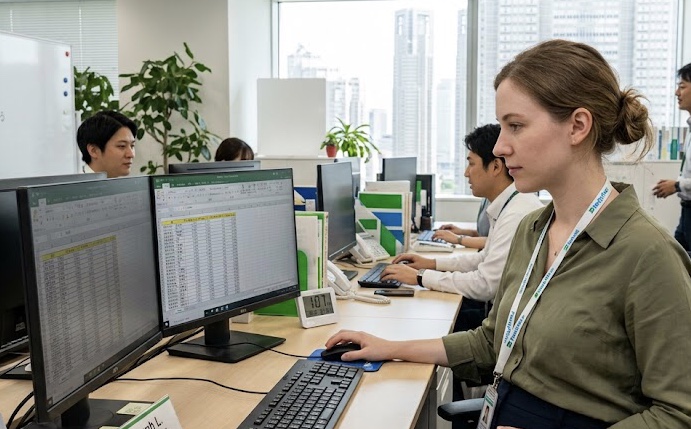
If you are a foreign worker in Japan and become pregnant, Japanese labor law provides strong protections against discrimination and other disadvantageous treatment. These protections apply to foreign workers as well as Japanese workers, including workers in non-regular employment.
Pregnancy, childbirth, and legally protected maternity or childcare leave cannot lawfully be used as reasons to dismiss you or otherwise disadvantage you. However, these protections do not mean that every dismissal or contract non-renewal involving a pregnant worker is automatically illegal; the circumstances and the actual reason for the employer's decision matter.
Here is what the law protects, what employers cannot do, and what you can do if your rights are violated.
1. What the Law Actually Prohibits
The Act on Securing of Equal Opportunity and Treatment between Men and Women in Employment (Equal Employment Opportunity Act) prohibits employers from dismissing or otherwise treating a female worker disadvantageously because of pregnancy, childbirth, or certain pregnancy- and childbirth-related circumstances.
Article 9 prohibits disadvantageous treatment because a worker:
- Is pregnant
- Has given birth
- Requests or takes maternity leave under Article 65 of the Labor Standards Act
- Experiences other pregnancy- or childbirth-related circumstances covered by the law and regulations
The law also prohibits an employer from establishing a rule that makes marriage, pregnancy, or childbirth a predetermined reason for resignation.
Examples of potentially unlawful treatment include:
- Dismissing you because you are pregnant
- Pressuring you to resign because you are pregnant
- Demoting you because of pregnancy or childbirth
- Reducing your salary or otherwise disadvantaging you because of pregnancy
- Refusing legally protected maternity leave because you are pregnant
- Taking disadvantageous action because you took legally protected maternity leave
- Changing your employment conditions because of pregnancy or childbirth
The same principle applies to childcare leave and certain other legally protected leave. Those protections are also provided under the Child Care and Family Care Leave Act.
Important: A Contract Cannot Override These Protections
An employment contract or workplace rule cannot lawfully make pregnancy or childbirth a predetermined reason for termination.
If an employment contract says, for example, that a female worker must resign when she becomes pregnant, that provision conflicts with the protections of the Equal Employment Opportunity Act.
2. Special Protection Against Dismissal During Pregnancy and After Childbirth
There is an additional protection under the Labor Standards Act.
Under Article 19 of the Labor Standards Act, an employer generally cannot dismiss a female worker:
- During pregnancy, or
- Within one year after childbirth
A dismissal during this protected period is presumed to be invalid unless the employer proves that the dismissal was not because of pregnancy, childbirth, or the legally protected circumstances covered by the provision.
This is an important protection, but it should not be described as an absolute ban on every dismissal during pregnancy or the year following childbirth.
For example, a dismissal may potentially be lawful if the employer can establish a legally valid reason unrelated to pregnancy or childbirth, subject to the applicable labor laws and the facts of the case.
Do not assume that an employer can simply label a dismissal "performance-related" and make it legal, however. The actual circumstances and reason for the dismissal can be examined.
3. Does This Apply to Foreign Workers and Specified Skilled Workers?
Yes.
The Ministry of Health, Labour and Welfare explicitly states that the prohibition against disadvantageous treatment because of pregnancy, childbirth, etc. applies to foreign workers in the same way as Japanese workers. MHLW specifically provides multilingual guidance for foreign workers.
This protection is not removed because you are:
- A foreign national
- A part-time worker
- A fixed-term employee
- A temporary or other non-regular worker
- A Technical Intern Trainee
- A Specified Skilled Worker (SSW)
Your immigration status does not give your employer permission to ignore Japanese labor law.
For Technical Intern Trainees in particular, the government also has specific guidance stating that employers must not dismiss or otherwise disadvantage foreign female workers because of pregnancy or childbirth.
4. What Does NOT Automatically Count as Pregnancy Discrimination?
Pregnancy protection does not mean that every employment decision involving a pregnant worker is automatically illegal.
For example:
Genuine performance issues
An employer may take legitimate employment action for reasons unrelated to pregnancy, provided the decision is genuinely based on lawful employment considerations and is not a pretext for pregnancy discrimination.
Expiration of a fixed-term contract
A fixed-term employment contract can reach its scheduled expiration.
However, simply calling something a "contract expiration" does not automatically make the decision lawful. If the real reason for refusing renewal is that the worker became pregnant or took legally protected leave, the action can constitute prohibited disadvantageous treatment.
Therefore, a pregnant fixed-term worker does not lose all protection merely because her contract has an expiration date.
5. Your Employer Must Also Prevent Pregnancy and Maternity Harassment
Japanese employers have legal obligations to prevent harassment related to pregnancy, childbirth, maternity leave, and childcare leave.
This is commonly referred to as mata-hara (マタハラ).
Employers are required to establish measures to prevent harassment related to pregnancy, childbirth, maternity leave, and childcare leave. MHLW specifically identifies pregnancy/childbirth-related harassment as an area covered by the relevant workplace consultation and enforcement system.
Examples can include:
- Repeatedly telling an employee that she should quit because she is pregnant
- Hostile or humiliating comments about pregnancy
- Pressuring an employee not to take legally protected leave
- Creating a hostile workplace because an employee is pregnant or has taken protected leave
- Failing to take appropriate action when the employer knows that pregnancy-related harassment is occurring
Health and safety during pregnancy
Pregnancy can also trigger separate protections concerning working conditions and maternal health.
If a doctor or midwife provides medical guidance requiring changes to working conditions, the employer may have obligations under the maternal health management provisions to take appropriate measures.
Therefore, the issue is not simply whether a doctor has "approved" a particular job. The employer must follow the applicable maternal-health rules and respond appropriately to medical guidance.
6. What to Do If Your Employer Discriminates Against You
If your employer tells you to resign, threatens dismissal, refuses legally protected leave, or otherwise treats you disadvantageously because of pregnancy, do not sign a resignation agreement or other document simply because your employer pressures you to do so.
Keep copies of:
- Employment contracts
- Payslips
- Emails
- LINE messages
- Written warnings
- Leave applications
- Medical documents
- Dismissal notices
- Messages telling you to resign
- Records of conversations with management
Then consider the following options.
Step 1: Contact the Prefectural Labor Bureau
For pregnancy discrimination, maternity harassment, childcare leave, and related employment disputes, one of the most appropriate government contacts is the Employment Environment and Equal Employment Department/Office (雇用環境・均等部(室)) of your Prefectural Labor Bureau.
These offices handle consultations involving:
- Pregnancy and childbirth-related disadvantageous treatment
- Maternity harassment
- Childcare leave
- Other childcare/family-care leave issues
- Sexual harassment
- Certain other workplace disputes
They can provide consultation and, where appropriate, administrative assistance or dispute-resolution procedures.
The Labor Bureau can also provide assistance for resolving employment disputes under the Equal Employment Opportunity Act and the Child Care and Family Care Leave Act.
Step 2: Contact the Labor Standards Inspection Office When the Issue Involves Labor Standards Violations
The Labor Standards Inspection Office (労働基準監督署) is responsible for enforcement of the Labor Standards Act and other labor standards legislation.
It can be particularly relevant where the problem involves matters such as:
- Unpaid wages
- Illegal working conditions
- Certain violations of statutory leave or working-hour rules
- Violations of the Labor Standards Act's dismissal restrictions
For example, Labor Standards Inspection Offices conduct inspections and corrective guidance concerning unpaid wages.
However, do not assume that the Labor Standards Inspection Office can simply order an employer to reinstate you in every pregnancy-discrimination dispute. Questions involving the legality of a dismissal and compensation can also require a labor tribunal, court action, union negotiation, or another dispute-resolution process.
For pregnancy discrimination specifically, the Prefectural Labor Bureau's Employment Environment and Equal Employment Department/Office is often the more appropriate first government contact.
Step 3: If You Are a Technical Intern Trainee
Technical Intern Trainees have additional support channels through the Organization for Technical Intern Training (OTIT).
OTIT provides consultation services for Technical Intern Trainees, including multilingual support.
If you are being threatened with termination, forced resignation, harassment, or other improper treatment because of pregnancy, contact OTIT as well as the appropriate labor authorities.
Important: OTIT is not the general SSW authority
OTIT's role concerning Specified Skilled Workers (SSW) is different.
OTIT's own contact information directs people with questions concerning the Specified Skilled Worker system to the relevant Regional Immigration Services Bureau rather than treating SSW workers as Technical Intern Trainees.
Therefore, an SSW worker should not simply be told that OTIT is the agency responsible for all SSW employment problems.
Step 4: Consider a Labor Union
You can also seek assistance from a labor union.
Some Japanese labor unions accept individual workers as members and can negotiate directly with an employer concerning:
- Dismissal
- Forced resignation
- Unpaid wages
- Discrimination
- Harassment
- Leave disputes
A union can sometimes negotiate with the employer without requiring you to immediately begin a court case.
7. What About Your Visa?
Your labor rights and immigration status are separate legal issues.
Being a foreign worker does not eliminate your protection against pregnancy discrimination. MHLW explicitly states that these protections apply to foreign workers.
Exercising your lawful labor rights does not, by itself, make you lose your status of residence.
But what if you lose your job?
This is where immigration rules become important.
Do not assume that losing your job automatically means you must immediately leave Japan or automatically change to "Designated Activities."
The appropriate procedure depends on your status of residence and the circumstances of your employment.
For example, Immigration Services Agency guidance states that an SSW worker who becomes unemployed does not necessarily have to leave Japan immediately and may remain during the period of validity while looking for a new job. However, if the person remains for three months or more without engaging in the activities corresponding to the status and without a justifiable reason, the status can potentially be subject to cancellation.
There are also immigration procedures allowing certain foreign workers whose employment becomes impossible for reasons beyond their control—such as an employer's bankruptcy, serious harassment, or serious violations—to apply for a Designated Activities status to continue staying in Japan while seeking new employment. This is not an automatic change of status; eligibility and the appropriate procedure must be determined individually.
Therefore:
Do not leave Japan or submit an immigration application based solely on your employer's instructions. If your employment is terminated while you are pregnant or on protected leave, consult the appropriate Immigration Services Bureau promptly about your particular status.
8. Keep Evidence of Pregnancy-Related Discrimination
If you believe your employer is discriminating against you, documentation can be extremely important.
Keep:
- Screenshots of LINE or other messages
- Emails
- Employment contracts
- Company rules
- Leave requests
- Medical certificates
- Payslips
- Dismissal notices
- Resignation requests
- Written explanations from your employer
- A chronological record of conversations
If someone tells you:
"You are pregnant, so you need to quit."
write down the date, time, location, exact words as closely as possible, and who was present.
Do not delete messages or throw away documents.
The Bottom Line
Pregnancy does not give an employer in Japan the right to fire a foreign worker, force her to resign, or otherwise disadvantage her because she is pregnant or has given birth.
Japanese law specifically prohibits pregnancy- and childbirth-related disadvantageous treatment, and MHLW confirms that these protections apply to foreign workers as well as Japanese workers.
There is also special protection against dismissal during pregnancy and for one year after childbirth under the Labor Standards Act, although this is not an absolute ban on every dismissal; an employer may avoid the statutory presumption where it can prove that the dismissal was not for the prohibited pregnancy/childbirth-related reasons.
If you face discrimination:
- Do not sign a resignation agreement under pressure.
- Save all evidence.
- Contact your Prefectural Labor Bureau's Employment Environment and Equal Employment Department/Office.
- Contact the Labor Standards Inspection Office when the issue involves Labor Standards Act violations.
- Technical Intern Trainees can also contact OTIT.
- SSW workers should use the appropriate Immigration Services Bureau channels rather than treating OTIT as their general SSW authority.
- If your employment is terminated, deal with the immigration consequences separately and promptly.
The important point is that being a foreign worker does not mean you have to choose between your pregnancy and your job. Japanese labor protections apply to you too.
Official guidance:
Ministry of Health, Labour and Welfare — Pregnancy and childbirth discrimination
MHLW — Consultation offices for pregnancy, childbirth and childcare issues
MHLW — Foreign workers and pregnancy/childbirth protections
Immigration Services Agency — Specified Skilled Worker FAQ
If you need personalized assistance with tax matters in Japan, contact HSB JAPAN for a professional consultation.